
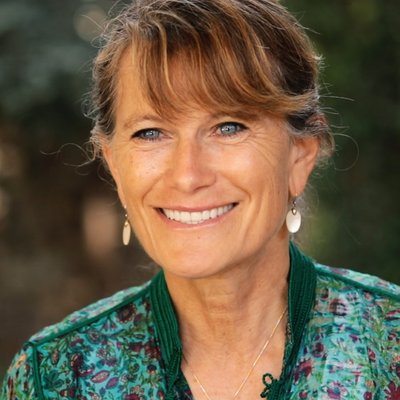
Jacqueline Novogratz considers poverty a question of freedom and choice, or the lack thereof. She claims that to look at it objectively, you have to look at income as only one variable. Jacqueline’s message in the TED Talk is to convey that when the system is broken, that’s the time for the people to come up with their own ways to make their lives satisfactory considering their situation, with Jane, the tailor from the broken shack village outside of Nairobi as her example.
I watched and rewatched Rutger Bregman’s Poverty isn’t a lack of character; it’s a lack of cash Talk. He claims that the way to eradicate poverty is with a basic income guarantee. Which is kind of a different take on the subject completely, but they’re worth comparing. Novogratz’s idea of solving poverty comes by changing the outlook. It’s mostly about finding satisfaction with less, in terms of monetary value, but coming to peace and finding all the positives in her situation, such as pride in her work and love in her family. This required some charity money, but it also required work on her end to show that she was worthy of charity (which is a questionable concept, but is clear here that it worked especially well for her situation). Bregman’s theory is a bit more pragmatic, but doesn’t flush out enough ideas to be considered the most solid plan. But this is a 15-minute TED Talk, not a full plan of action. It seems that his methodology to eliminate poverty is to re-prioritize where our money goes so we can put the impoverished first. He mentioned abolishing the jobs of bureaucrats and just giving all their money to those who need it, because people being poor costs this country billions and billions of dollars every year (which I wish he would have elaborated on more). He had proof of this working in a few different communities, but never on a national level, which I believe is where the method gets tricky. But I don’t dislike the idea and don’t care particularly much about where money is reallocated to in order to make lives better.
I believe the solution lies in using bits and pieces from both of these ideas, as well as hearing out many more individuals from different wealth statuses in forming a plan that works. That said, I value Jacqueline’s idea more because all too often, regardless of wealth, people are rarely satisfied with the lives they lead and a change in attitude needs to come first. But, even if everybody in the world adopted this viewpoint, chaotic tragedies and misfortune and poverty itself still permeate the lives of too many people to find pride and spiritual fortune so easily.

On another note, the Sustainable Development Goals are a series of goals written by the United Nations that are intended to better every community on the planet. Each one contributes to an idea that betters the world by ensuring that every person is basically okay. They try to include all different ways to help society such as: Quality education, gender equality, no hunger, and teamwork. Whether it’s social justice or physical needs of the citizens of the earth, SDGs just try to eliminate all problems for all people. Neoliberalism seems, to me, to be the attempt to achieve these goals by cooperating with other nations to redistribute money equally among all countries in order to attain some equilibrium cash-wise. This all of course, is supposed to run through IMF and the World Bank.
In regards to John McArthur’s accused “Players on the Bench”, he’s referring largely to the United States, mostly under the Bush administration, but Obama holds some blame too, and the World Bank for not doing enough to eradicate poverty in struggling countries. World Bank, as the pillar for wealth distribution in, well, the world it should have played a much bigger part in fulfilling the Millenium Development goals, when they didn’t help poorer nations assess financial gaps or letting them know when it looked like there was another financial gap. The U.S. missed out mostly in the beginning by not following through on promises to increase world aid. By the time Obama was in office, it was practically too late to achieve the goals.
It seems that the 2005 article wanted to highlight all the ways we could be helping impoverished countries while recognizing the potential drawbacks. There’s a lot of variables that come with offering money. The people need to be in the right mindset, as to the bureaucrats. And the problem lies further in how much trust comes from those who dedicate the monetary offer.
In How Poverty Ends, Duflo and Banerjee spend ten pages discussing just what leads to fast economic growth. The end result is that it’s impossible to pinpoint one thing. It has to be a mix of smart decisions and good timing for the world of business. But what we are sure of is that improving quality of life by treating Malaria or AIDS for example can lead to further success for the country because the larger problems have been taken care of. I think that’s a really valuable insight. Good often follows good, and though economic growth may not be the direct outcome of lowering the amount of infant deaths, it’s most likely that the lives of the citizens has nowhere to go but up after that. I thought this text was worth reading, because it’s true that we can’t point to any one factor that leads to GDP growth, but we can look at factors that lead to better living situations for the people and go from there.
References: Novogratz, J. (n.d.). An escape from poverty. Retrieved January 28, 2020, from https://www.ted.com/talks/jacqueline_novogratz_an_escape_from_poverty?language=en Bregman, R. (n.d.). Poverty isn’t a lack of character; it’s a lack of cash. Retrieved January 28, 2020, from https://www.ted.com/talks/rutger_bregman_poverty_isn_t_a_lack_of_character_it_s_a_lack_of_cash?language=en About the Sustainable Development Goals – United Nations Sustainable Development. (n.d.). Retrieved January 28, 2020, from https://www.un.org/sustainabledevelopment/sustainable-development-goals/ McArthur, J. W. (2013, December 6). Own the Goals. Retrieved January 28, 2020, from https://www.foreignaffairs.com/articles/2013-03-01/own-goals Birdsall, N., Rodrik, D., & Subramanian, A. (2015, September 15). How to Help Poor Countries. Retrieved January 28, 2020, from https://www.foreignaffairs.com/articles/2005-07-01/how-help-poor-countries Banerjee, A. V., & Duflo, E. (2019, December 11). How Poverty Ends. Retrieved January 28, 2020, from https://www.foreignaffairs.com/articles/2019-12-03/how-poverty-ends?utm_source=facebook_posts
 Blog 4810