By: Kody Gustafson
In his writings Steven Radelet identifies 5 factors that he classifies as being good news in Africa. The first factor is the rise of more democratic and accountable governments. This allows for citizens to become involved with the process and gives them an avenue for voicing their concerns in a meaningful way. Second is the implementation of more sensible economic policies which can free up resources for other pressing issues that were previously neglected due to stagnant policies. Third is the end of the decade’s long debt crisis, which has changed the relationship between Africa and the international community. Fourth is the spread of new technologies that are creating new opportunities for business and political accountability. Giving people access to the internet allows them to access information from across the globe and expands their view of the world. His final factor was the emergence of a new generation of policy makers, activists, and business leaders. These new leaders have been able to see the world from a broader view due to the expansion of access to worldwide travel and can bring new and innovative policies to the country.
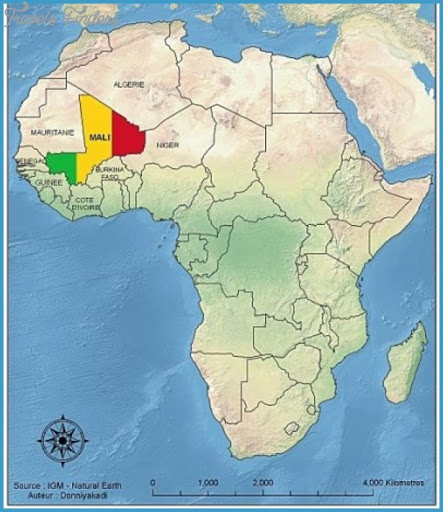
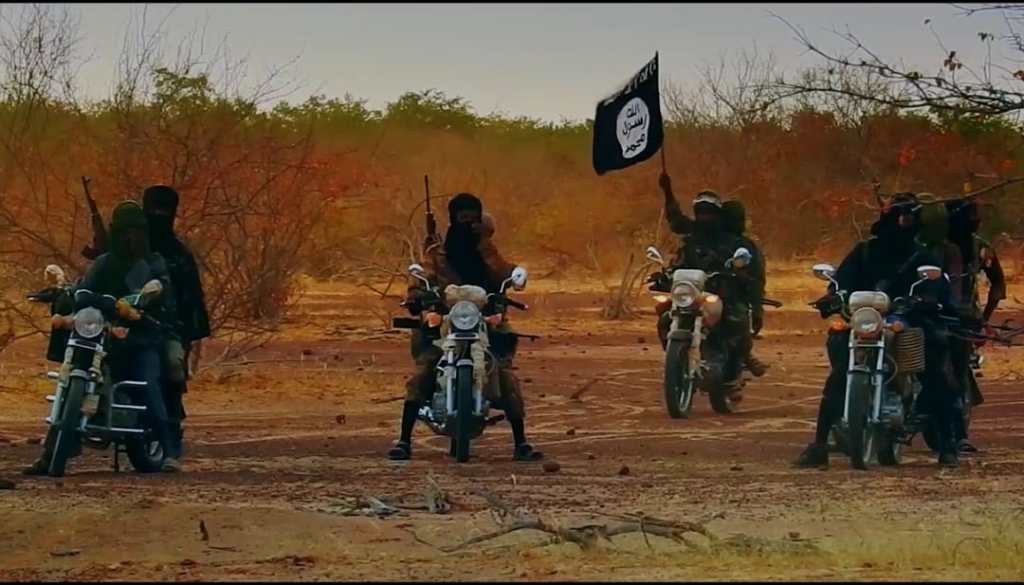
I do agree with Radelet that these factors are crucial in determining the positive future for countries which are still developing in Africa. After doing additional research I found that the factors he goes on the describe are directly linked to positive progress being made in these countries. The factors he lists are relevant to my country of Mali, however it is the lack of these factors that contribute to the current situation in the country. Politically Mali is a semi-presidential republic that elects their president directly by an absolute majority of the popular vote. However, the system is flawed, and much instability surrounds the presidency and other political intuitions within the county. A military coup was staged in 2012 and there is currently conflict between the government and armed militant groups in the northern regions of the country. The instability in the region has deterred aid groups from operating in the region in part due to attacks carried out on Un peace workers. Mali is geographically landlocked and is a region that is prone to droughts which have been proliferated by climate change. The arid climate and lack of efficient infrastructure in the country has made implementing new technology in the area a difficult task. Roughly 90 percent of the country’s poor population live in rural areas and overpopulation in the south region of Mali has further worsened the problem.
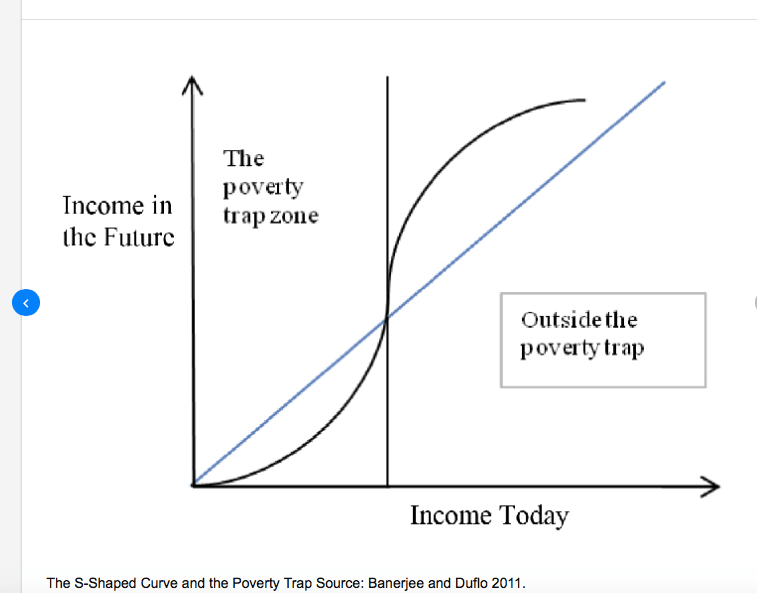
After reading Poor Economics I found that many people living in Mali are in a type of poverty trap. I believe that with a more transparent government Mali would become a more attractive place for aid to be sent. This aid would allow for them to invest in critical programs such as education which could help to break the poverty cycle that many live in. These traps have multiple forms a lack of education can lead to limited work opportunities which puts people in a cycle of poverty. Poverty traps are a type of self-reinforcing mechanism that causes poverty to persist due to a lack of information and incorrect expectations. The book goes on to discuss how when people start too low on an economic scale they become trapped and are unable to move up the economic ladder. The problem for the poor is that their income grows so slowly that their income for tomorrow is actually lower than it is today. This leads to the poor becoming poorer and the rich staying rich.
The first sustainable development goal of ending poverty in all its forms everywhere has so far been unsuccessful in Mali. This failure can be attributed to corruption, weak infrastructure and political turmoil. Efforts have been made to improve cell phone and internet access to the people of Mali, however the geographical nature of the country has slowed this progress especially to those in poverty-stricken areas. According to the World Bank economic growth in Mali has fell for the third straight year. To combat poverty in the region the World Bank has established 22 national projects and 8 regional projects worth and estimated 1.5 billion dollars collectively in the country.
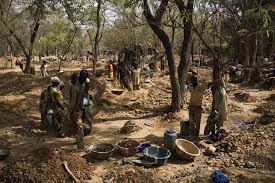
There is currently a Human Capital issue in Mali and it must be addressed if meaningful change is to be enacted in combatting the issue. Many of those living in Mali lack sufficient education and employment opportunities that are associated with improving human capital. Mali is a country that is heavily dependent on mining and extracting minerals that will be used for trade. This type of work is not suitable for the elderly, or those incapable of partaking in hours of hard labor. Jobs which are sustainable for all classes must be brought to or established in Mali to bring people out of poverty.
After doing the readings I was let with a question: How can incentives to invest be created in developing countries so that once citizens become educated they will be more likely to stay and improve their country’s situation rather than leaving for other more developed places? (Brain Drain)
Resources:
Banerjee, Abhijit V., and Esther Duflo. Poor Economics: a Radical Rethinking of the Way to Fight Global Poverty. PublicAffairs, 2012.
Pettinger, Tejvan, et al. “Human Capital Definition and Importance.” Economics Help, 28 Nov. 2019, www.economicshelp.org/blog/26076/economics/human-capital-definition-and-importance/.
“Year in Review: 2017 in 12 Charts.” World Bank, http://www.worldbank.org/en/news/feature/2017/12/15/year-in-review-2017-in-12-charts.
Radelet, Steven C. Emerging Africa: How 17 Countries Are Leading the Way. Center for Global Development, 2010.
“The World Factbook: Mali.” Central Intelligence Agency, Central Intelligence Agency, 1 Feb. 2018, http://www.cia.gov/library/publications/the-world-factbook/geos/ml.html.
“Goal 1 .:. Sustainable Development Knowledge Platform.” United Nations, United Nations, sustainabledevelopment.un.org/sdg1.
Editor. “Mali Map.” TravelsFinders.Com ®, TravelsFinders.Com ®, 3 Nov. 2016, travelsfinders.com/mali-map.html.
 Blog 4810