By: Kody Gustafson
In Steven Radelets “Emerging Africa” he goes on to discuss a new and innovative group of people leading the fight to end poverty and change negative perceptions of African countries. Dubbed the “Cheetah generation” this new group of leaders are working to replace stagnant and outdated policies with new innovative ideas which foster transparency and accountability. One way in which they are attempting to redefine Africa is by furthering democracy in places it has already been established and bringing it to areas which still live under authoritarian rule. Another area in which they are fostering change is by promoting growth in the private sector and in doing so they will create stronger ties between African countries and the globe. One unique aspect of this “Cheetah generation” is that they want to create a new Africa which is neither dependent on the western world for guidance or bogged down by past regimes. A key to changing the current situation in Africa will be to create communities that are “stable, safe, and dynamic” so they can establish themselves on a global level. In contrast to these new innovative leaders, Radelet describes the “Hippo generation” as being a slow-moving generation. Those included in this Hippo generation are leaders that attained power through fighting against former colonial and imperial powers. These leaders were capable of defeating their predecessors, however when it came to running the country under their leadership many of them failed to create sustainable institutions. This slow-moving generation of leaders set their respective countries back by consolidating power amongst those most loyal to them rather than those who were most qualified.
I believe Radelets positive view on the African ICT explosion is both valid and sustainable. Everyday technology is evolving, and it continues to become more readily available to people across the globe every day. By expanding internet access business opportunities are expanded to even the most remote corners of the world. One interesting thing I took from the readings was that cutting out a middle man can create many opportunities that were previously unattainable. Giving local farmers the ability to check agricultural prices and attain market information without the assistance of someone else allows them to make decisions for themselves and keep up with current market trends. The information technology boom also promotes government transparency and accountability. Citizens can now search for information on their own rather than getting news from one central source. Giving those living in poor areas technology which can expand literacy rates will promote a more educated population. Some challenges currently facing the spread of information technology are a lack of reliable electricity in impoverished areas as well as low literacy rates and the high costs associated with technology. Even with these challenges there is still hope, within the last ten years more fiber optic cables have been laid to connect Africa to the rest of the world.
An example of an emerging leader that would be considered a part of the “Cheetah generation” is Rahama Nantoume. She is a journalist and peace builder which is committed to promoting peace and preventing extremism in Mali. She currently works in a think tank in Mali that is working on issues of governance, peace, and security. She is a part of this new generation that is convinced that a better world is possible through new and innovative ideas.
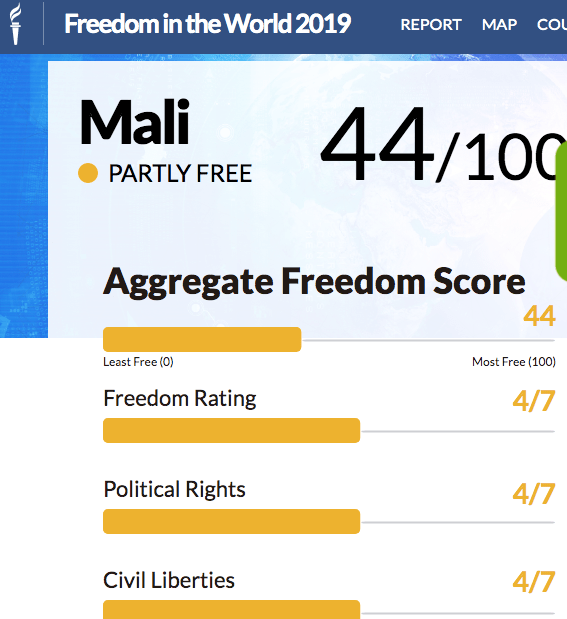
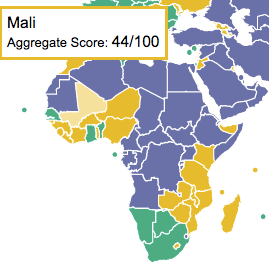
In chapter 3 of Emerging Africa, Radelet describes democracy as consisting of a protection of basic civil liberties, and human rights as well as being accountable to their citizens. A shift from the “Big Man” to the institution of power is another prominent point he makes concerning democracy. The growth of nongovernment watchdog groups which seek to monitor the government are also essential to the growth of democracy. Democracies have been ranked using Freedom House and polity iv factors. Mali has an aggregate score of 44 on the freedom scale which is relatively higher than many other countries in Africa. The country is described as being partly free but still struggles from political instability and violence. There is much work to be done in Mali but they are making strides in the right direction away from their imperial past. I also found that YALI is currently active in Mali and strides have been made to make medical information more available to the public.
While reading Poor economics I found that there are currently many challenges preventing countries from lifting themselves out of poverty. One of these challenges is that there is rampant corruption in many of these countries. The chapter references police men requesting bribes in exchange for assistance which is most impactful on the poor which lack the resources to pay such bribes. Another major issue is that there is much risk involved with the poor making financial decisions because if their decision doesn’t work out they bear all of the losses. Many living in poor countries work casual jobs that lack an assurance that the job will be on a consistent basis. When budget cuts are implemented the lowest workers, which are usually the poorest are cut first leaving them without an income. When economic crisis hits the poor are most heavily affected because if their already minimal consumption is cut they will be left with little to nothing.
Resources:
- “Freedom in the World 2019 Map.” Map | Freedom House, 13 Feb. 2019, freedomhouse.org/report/freedom-world/freedom-world-2019/map.
- “Rahama Nantoume.” IREX, www.irex.org/people/rahama-nantoume.
- “YALI Campaigns | Young African Leaders Initiative Network.” U.S. Department of State, U.S. Department of State, yali.state.gov/content block/yali-campaigns/.
- Radelet, Steven C. Emerging Africa: How 17 Countries Are Leading the Way. Center for Global Development, 2010.
- Banerjee, Abhijit V., and Esther Duflo. Poor Economics: Barefoot Hedge-Fund Managers, DIY Doctors and the Surprising Truth about Life on $1 a Day. Penguin, 2012.
- “Index.” Index, http://www.systemicpeace.org/.
 Blog 4810