The “Big Man”, as briefly described by Radelet in chapter 3 of Emerging Africa, refers to the dictators of the countries yet to emerge in Africa around the time of the late 1980s before democracy had risen in popularity. “Big Man” was a state of being as well as a mindset for those who were in charge. He was more concerned with the maintenance and growth of his own power versus the well-being of his people and the problems they had with their respected countries’ state of affairs.
The “Cheetah Generation” is considered the generation that seeks and works toward progress in their countries. The Cheetahs want see Africa for its potential and promote change in their governments. They want transparency and honesty from their rulers, not corruption, greed, and content with a failing system. “The cheetah generation means many things, but five stand out: ideas, technology, entrepreneurship, market power, and the push for good governance and accountability.” (Radelet).
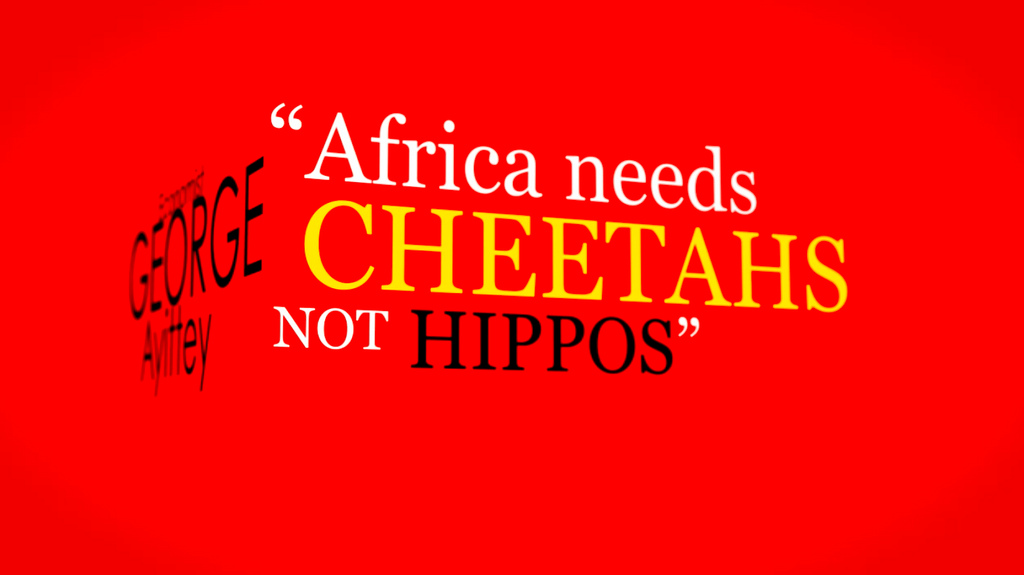
The “Hippo Generation” on the other hand is the party that doesn’t mind the state of affairs that plagues the economy and lack of democracy of the country. Hippos are unbothered by a failing system because they have the power to work around it. Hippos are more often than not, the ruling class, governing the country with outdated methods. “They proved to be far more proficient at fighting against the colonial government than they were at running their own. The leaders consolidated power in their own hands, weakened mechanisms for accountability and transparency and hung on in office for far too long” (Radelet).
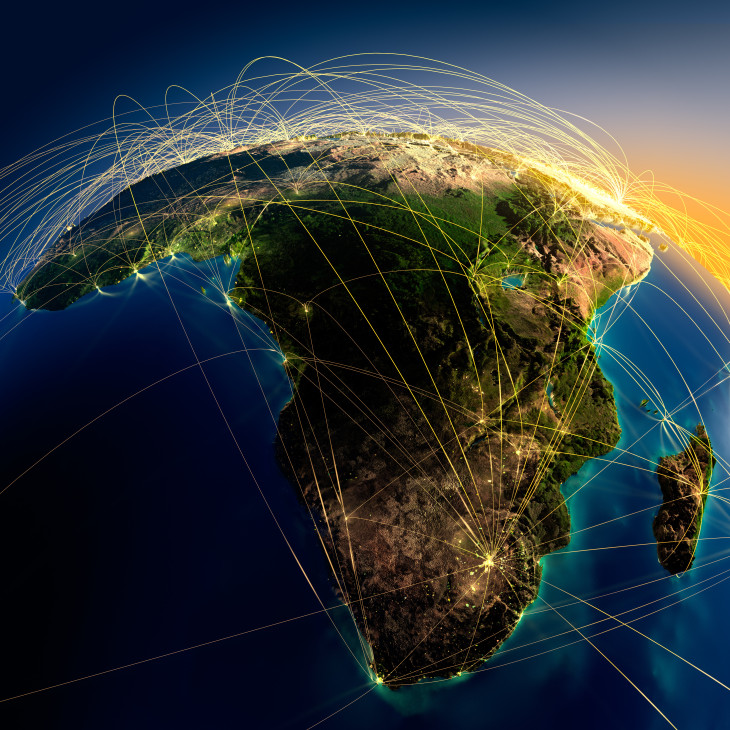
I think Radelet’s views of the Internet and Mobile explosion in Africa is really justified. Africa’s catching up to the rest of the modern world in terms of disposable information and available technology. In terms of sustainability, it doesn’t come off as any less sustainable than what we’re working with over here. Radelet doesn’t go into detail on the amount of factories or industrialization. And from a quick Google search, it looks like the level of industrialization is growing, but not to the point of environmental harm and pollution produced in the U.S., Brazil, or industrialized Asia. Business and networking is growing for the 17 African countries coming out of the dark ages. The installation and maintenance of fiber optic lines on land or under the sea has created hundreds of new jobs across the continent. Farmers can update buyers on the state of their crops and through services like TradeNet, they have instant access to knowledge of who they’re marketing with. Village phone operating is a viable career to plenty of local work-seekers (women in large part) who couldn’t read or write ten years ago, but are now tech-competent and contributing to the community while making a steady wage! Radelet’s excitement for the tech boom in modernized Africa seems completely justified.
One challenge that had to be overcome at the time the book was written was the cost of web service, which was “20-40 times higher” than we paid in the U.S at the time. But Radelet predicted that prices would soon drop, which is taking longer than expected. So much so that Africans have formed the Alliance for Affordable Internet (A4AI). But apart from that, challenges only seem to be disappearing faster. Issues like banking and money transfers have been solved through mobile phone usage so the costs of wiring money through third party sources like Western Union are deteriorating. People can move funds around with much greater ease and security than in years past. The most prominent problems that come with the technology are fake news and defamation of politicians or other public figures. But services have sprouted to basically fact check and verify the validity of such claims. Things really do seem to be looking up.
As for my selected country to research throughout this course, South Sudan hasn’t upgraded in the same way the 17 emerging nations Radelet speaks of. But nonetheless, there are heroes to be spoken for in their communities. South Sudan is slower to the industrial punch, but isn’t devoid of technology by any means. One man who makes use of what the country has is Elias Tande, a radio presenter. Elias spreads good word throughout his community and speaks for advocacy and good governance. He uses the media outlet at his disposal to build peace by keeping his listeners informed. In a land that doesn’t have the same access to information as much of the world, it’s easy to be misinformed or to make presumptions of what the other side (be it rebels or tribalists) feels or how they act. Tande attempts to bring clarity to his people. He carries a lot of weight at the station as well, as a concept developer, producer, and host of the radio show. In an interview with Strathmore University, he states “But you see the laws are there – yes – but then our cultures are always there. And the way you bring in the law into the lives of people within the cultural context may affect them in the other way around. So it really taught me so much on how to get into the cultural context and try to change the mindset to a positive one.” This being in the context of rebels versus tribalists and how to keep each of their cultures sacred without breaking laws and causing violence in the community until the government can come to a satisfactory consensus for all. I would by all means consider Elias Tande a cheetah.
Democracy can’t be defined by any one, concrete factor. It’s a series of issues that considers how the people of the nation are treated and governed, and how those who govern do their jobs. It’s determined by civil liberties, political rights, opportunities as citizens, individual freedoms, and other terms that describe just how free the people are. According to Freedom House, South Sudan is ranked among the lowest for all of these issues. As a country broken into pieces by civil war, its electoral process possesses little to no room for organization. The last election, five years ago was postponed thanks to war among tribes. And the official president originally elected in 2010 basically has chief authority over all the land. He can fire any staff member at will and cannot be impeached. The people have little to no right to oppose. Its aggregate freedom score, again from Freedom House, is 2/100. Its state fragility index according to Systematicpeace.org is “extreme”.
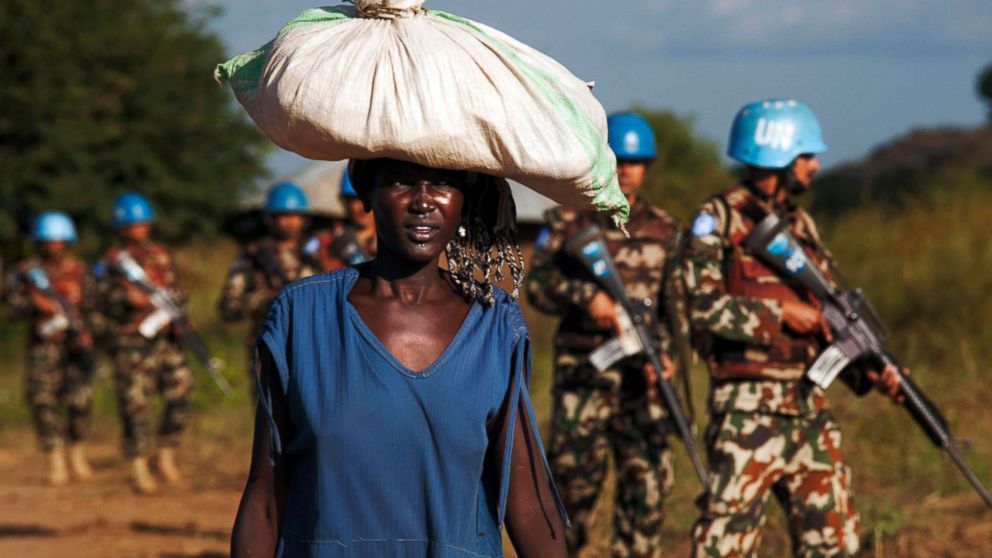
Thankfully, YALI (Young African Leaders Initiative) is at least a little active in South Sudan. There’s a few standout members that are making changes step-by-step in various communities. One example is Abraham Bakuenyin, an alumni of the Regional Leadership Center East Africa. He’s completed his share of YALI Network online courses and has spent much time “engaged with training and advocating for Women’s Rights, Human Rights, and encouraging meaningful youth participation towards peace and nation building.” He’s just one among a few members working with the citizens of South Sudan to help build communities and unite people in the pursuit of peace and understanding. (YALI.state.gov).
In regards to the second part of the blog post, some effective health investments include: bed nets, IV solutes (salt and sugar), chlorine and bleach for mass water purification, immunizing drugs (a vast list of inexpensive meds and vaccines). And certainly the most important health investment for every one of these communities trapped in poverty is education. These people have potential access to bed nets and water purification if they would just put up a little bit of money to invest in such products, but evidence shows that they often don’t, even if they have the money. Duflo & Banerjee claim that the poor seem to spend their money on expensive cures rather than cheap prevention in most cases. Education as well as destigmatization. Even the poor look down on free public healthcare rather than private care. Another necessity is qualified doctors. All across India are “Bengali Doctors” with some to no training. Some are foolishly confident, some are reasonably aware of their skills or lack thereof. Regardless, they still don’t hesitate to practice medicine in whatever village they settle in.
Another issue is the government health system. The rate of absent healthcare providers funded by the government is entirely too high. Bangladesh, Ecuador, India, Indonesia, Peru, and Uganda clocked in at an average absentee rate of 35%. Duflo and Banerjee go on to claim that even when the doctors and nurses were present, they didn’t do a satisfactory job (satisfactory by the lowest of standards). They would under-analyze the patient, then over provide with various medications after learning damn near nothing about the patient’s ailment. So as it turns out, it’s not even that the poor are misjudging government-funded healthcare. It kind of deserves to be looked down upon. Add better doctors and higher healthcare standards by the government to the list of things to invest in. BUT! Even when they performed a test to provide communities with proper healthcare initiatives like free vaccines, the rate of those who went fully immunized only rose by 11%! So what’s to blame? Is it the people for not informing themselves when the resources and advertisements for such resources are all around?
Some of this goes back to ignorance. Many people don’t use certain remedies because there are faith-based aversions to such remedies as immunizations, or, in some cases, just eating rice. The case may be that what people need is to be constantly reminded of what they have at their disposal. No amount of aid, be it monetary or the actual, physical relief to their problems if those who need the aid are still in the dark about the wonders of modern medicine and preventive products. We see the same thing in developed countries. Ignorance and lack of initiative to care for one’s self. We should just be thankful that our surroundings aren’t as dire and that this doesn’t apply to the majority so vastly. (Duflo & Banerjee).
South Sudan. (2019, May 20). Retrieved February 11, 2020, from https://freedomhouse.org/report/freedom-world/2019/south-sudan
Center for Systemic Peace. (2018). Retrieved February 11, 2020, from http://www.systemicpeace.org/conflicttrends.html
Country of the Week: South Sudan | YALI. (2018, October 16). Retrieved February 11, 2020, from https://yali.state.gov/country-of-the-week-south-sudan/
Banerjee, A. V., & Duflo, E. (2012). Poor economics: a radical rethinking of the way to fight global poverty. New York: PublicAffairs.
Radelet, S. C. (2010). Emerging Africa: how 17 countries are leading the way. Washington, D.C.: Center for Global Development.
Strathmore University (2018, December 10). The everyday heroes of South Sudan. Retrieved February 11, 2020, from https://www.youtube.com/watch?v=Q3KR9pXl8xk
 Blog 4810