By: Kody Gustafson
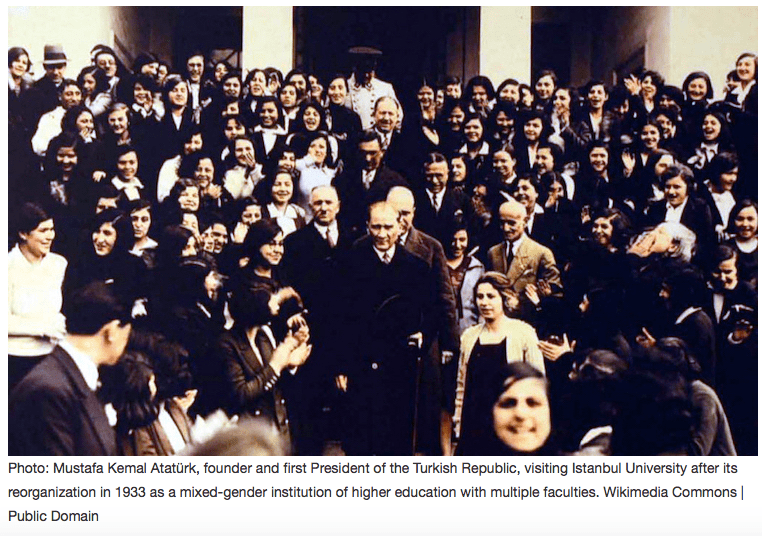
In our readings the main focus was set on establishing secular modernity in Turkey, and why Iran failed to do the same. Secular modernity in Turkey was brought forth by Mustafa Kemal who as president implemented a litany of policies which sought to incorporate western ideals into Turkish society and diminishing the power of religion in state affairs. By establishing a republic in which the president was elected by the general assembly, Turkey alienated itself from its mostly autocratic counterparts in the Middle East. In an attempt to create a secular state president Kemal banished the Caliph and would implement many policies that would limit religious influence in Turkey. Some of these policies included closing religious schools and taking the entire school system under government control. It is important to note that these policies were able to take place because the clergy in Turkey was not as powerful as that in Iran. In an attempt to further modernize Turkey Swiss civil, criminal, and penal codes replaced the former Muslim Sharia code. Turkey also moved towards a 12-month calendar and implemented many other western ideals into their society. Another important reason these changes were able to be effective in Turkey is because most Muslims living in the country followed Sunni Islam. This branch of Islam had been acquainted with borrowing before the state and following orders from a sultan who was in a sense all powerful. I found Kemal’s hatred of the Fez to be interesting and that he equated it an “emblem of hatred of progress” further demonstrated his want to break away from eastern ideals. I believe this was achieved however it has many shortcomings. Kemal ruled in a way in which was harsh on dissenters and went to great lengths to suppress certain voices.
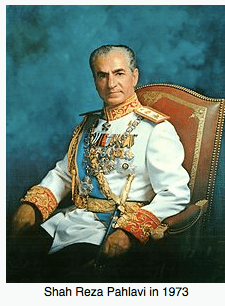
On the other hand, Iran’s approach to democracy and modernity were not as successful. Religious leaders in Iran saw what was taking place in Turkey and sought to prevent the same from occurring in Iran. In an attempt to block some of Rezas most prominent projects clerics would put pressure on certain programs and stalled to prevent some from being enacted. During his coronation Reza sought to make it western styled and borrowed concepts from the Spanish and British. Many Iranians followed the teachings of Shiite Islam which emphasized fidelity to religion before loyalty to the state. It also prohibited the clergy from ever bowing to temporal power. This made enacting change in Iran much more difficult than in Turkey. The clergy was powerful and wouldn’t allow for many progressive policies. There was a large power struggle between mosque and state in Iran. This struggle is highlighted by the disagreement between Reza and the clergy in closing down bath houses. Simple projects that could go a long way in improving health were banned by religious officials. Another area in which Iran is different is that the clergy would not allow for women to have the right to vote. Foreign influence also stalled Iran’s progress towards democracy. The British sough to retain decisive influence in the area and this was a topic of discord with Iranian leaders. Reza also hindered Iran from becoming a modern society through his strong nationalist feelings. He went as far as banning foreign words from being on street signs and only relied on Iranian doctors and was skeptical of others.
While trying to achieve unity both countries faced many problems. One of the biggest problems was that democracy had not fared well in places that had “turbulent” societies. Islam and democracy had not previously worked out and they were going against history here. Many people living in Iran and Turkey were illiterate and knew very little of life outside their locales making it even harder to press for change. Another issue in persuading people that democracy was the best form of government is that this was a time were dictatorships seemed to be the best form of governance. Leaders such as Stalin and Hitler had captivated their nations and seemed to be doing good things for their people. One of the biggest problems as I have discussed is religion and in particular orthodox religion that pressed back against progress. Many people such as nomads living in the area did not want to change and give up their way of life. Civic rebellions were also common due to many policies being enacted by decree.
The Dodd’s readings discuss problems with conventional geopolitical thinking and urges readers to approach geopolitics in a more critical way. To think critically about geopolitics, one must come to realize that the current system is not natural nor inevitable. Critical geopolitical thinkers look at the world and geopolitics in a more diverse nature and try to understand differences in certain areas. One problem associated with conventional geopolitics includes its overemphasis on conflict and competition. It neglects to assess the effects that cooperation could have and is one dimensional. Realism is a central component to historical geopolitics and sees the world as being in a state of anarchy which is not accurate. Historically geopolitics has been used to put what is going on in the world in simple terms. However, in doing so it neglects many nuances of each situation. Dodds proposes that we start to scrutinize thinkers and commentators who believe they can make accurate assumptions about the world based on historical geopolitics. To think critically is to break don each situation further and one way to do so is by breaking down geopolitics into three categories. These categories include looking at geopolitics in a formal, practical and popular sense. This allows for us to study geopolitics in a much more concise way that better reflects what is happening in the world. By looking at geopolitics in a critical sense we can begin to liberate people from oppressive geopolitical structures which were insufficient in describing their situation. We must promote the world as being a more equal place and move past preconceived beliefs.
Resources: Harris, Phil. “Reflections on Turkey: From Mustafa Kemal To Recep Erdoğan.” InDepthNews, 14 Mar. 2018, http://www.indepthnews.net/index.php/the-world/eu-europe/1743-reflections-on-turkey-from-mustafa-kemal-to-recep-erdogan.
Kinzer, Stephen. Reset: Iran, Turkey, and Americas Future. St. Martins Griffin, 2011
“Mohammad Reza Pahlavi.” Wikipedia, Wikimedia Foundation, 27 Feb. 2020, en.wikipedia.org/wiki/Mohammad_Reza_Pahlavi.
Dodds, Klaus. Geopolitics. Sage, 2009
 Blog 4810