By: Kody Gustafson
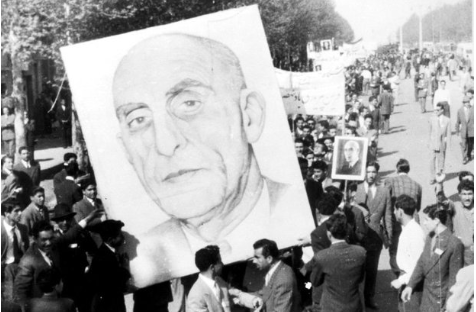
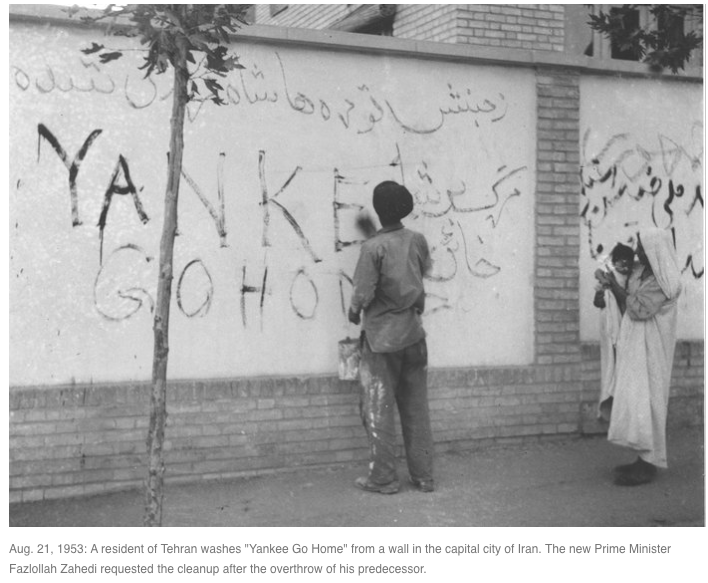
In this week’s readings, Steven Kinzer discusses the 1953 coup in Iran and its numerous effects. The ramifications of the coup were immense both nationally and internationally. On the national level Iranians who had longed for democracy and had pushed for democracy to be strengthened were let down and felt betrayed by the U.S. Many Iranians had looked at the U.S and their fight for democracy as a beacon of hope and a nation they could look to for help. This all changed with the coup in 1953 and many Iranians began to resent the United States and their involvement within Iran. Iranians have long known the oppressive nature of nations that had conquered their lands and, in a sense, they saw the U.S as being another. Many felt that the U.S had in a sense robbed them of their democracy and impeded on their ability to govern themselves. The U.S became a hostile rather than a friend to many Iranians. The coup was a major setback in Iran’s political development and ended democratic rule. The U.S and the British put Mohammad Reza Pahlavi into power and his regime would become more oppressive on the Iranian people. This forced move by the U.S and British would affect many parts of Iranian life and corruption would ensue in many Iranian institutions.
Another prominent part of our readings was centered around “dual containment” and what that entailed. Dual containment included playing Iran and Iraq off one another in the hopes that eventually there would be a regime change due to the need to address the people’s needs. The U.S supplied arms and intel to Iraq while also supporting Iran. This kept them occupied with one another while the U.S continued to operate within the region. I don’t believe this was a good strategy and left millions of people subject to violence. While the U.S waited around for regime change many lost their lives and suffered. I am appalled that this was an actual policy and I believe it has many striking flaws.
The Truman and Eisenhower administrations implemented two very different approaches to world politics. The Truman administration was much more sympathetic to poor nations that had begun to see the rise in nationalism. One example of the Truman administration being sympathetic is when the U.S.S Missouri was used to bring back the remains of the Turkish ambassador. U.S navy members also marched with Turkish soldiers during the honor guard and this gesture was well received by the Turkish people. Truman tried to be a mediator between Iran and the British when they were in a dispute over oil within the country. Rather than trying to fight back against the nationalization of companies, Truman looked to find common ground and ways to appease both sides. On the other hand, the Eisenhower administration took a much more aggressive approach to world politics. Eisenhower would not stand for a country which he saw as anti-western to nationalize companies within their borders. He merely saw these small countries as being players in the much bigger cold war game. If these countries didn’t side with the west, they would be subject to U.S intervention.
In the video we watched professor Mead brings up “the axis of weevils” and offers a new perspective on current geopolitical situations. This “axis of weevils” consists of smaller countries which are in opposition to the current geopolitical landscape of the world. These countries lack the military ability to wage a full-on war, however rather than directly fighting against western forces such as the U.S they have decided to chip away at their influence in their regions. These countries are thought to share a common interest in rooting out U.S influence and disrupting their alliances within the region. I believe Meades argument has some valid points and by doing further research I have found similarities with what he is saying and what is currently taking place. However, I think his argument lacks sufficient evidence as a whole. I believe the phrase of “axis of weevils” is a generalized geopolitical term that unjustly characterizes a group.
Mead, Walter Russell. “The Return of Geopolitics.” Foreign Affairs, Foreign Affairs Magazine, 15 Sept. 2015, http://www.foreignaffairs.com/articles/china/2014-04-17/return-geopolitics.
- Ben-Meir, Alon, et al. “The Dual Containment Strategy Is No Longer Viable.” The Dual Containment Strategy Is No Longer Viable | Middle East Policy Council, mepc.org/node/4827.
- Berkley Center for Religion, and Georgetown University. “The Turkish-Armenian Border.” Berkley Center Fo Religion, Peace and World Affairs, berkleycenter.georgetown.edu/posts/the-turkish-armenian-border.
- “The ‘Axis of Weevils’: Silly and Misleading.” The American Conservative, http://www.theamericanconservative.com/larison/the-axis-of-weevils-silly-and-misleading/.
 Blog 4810