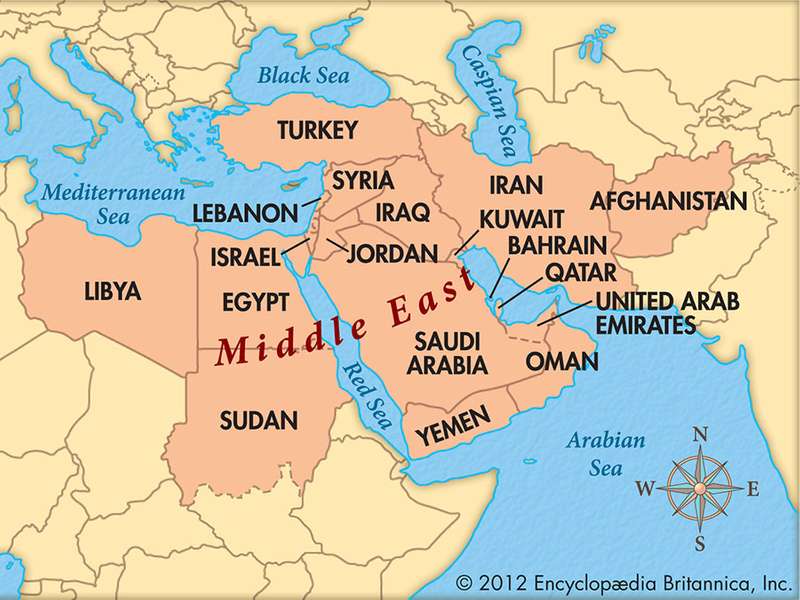
1: There’s 4 big myths discussed by Justin Vaisse: Muslims are fully characterized by their religion, Muslims are inherently foreign, they form a “distinct, cohesive, and bitter group”, and Muslims are beginning to catch up to the “native” population.

These are incorrect for plenty of reasons. For starters, religion is religion and to assume entire character based on it is, for lack of a better word, racist. To assume anybody’s whole identity derived exclusively from what faith they practice is both incorrect and demeaning. This almost seems like the wrong place to preach “Muslims are people too!” because, obviously they are. But there are plenty of examples by vocal ignorants as well as established print media (i.e. The Washington Post in Vaisse’s article) that reduce them to what they believe. Additionally, millions on millions of Muslims are very European and many would consider themselves European before identifying with Islam. This viewpoint is none other than invalid. Onto the third myth that finds European Muslims as cohesive, distinct, and bitter: Muslims are no more cohesive than the broad community of Christians in the U.S. who’s personal, religious, and political views are subject to change all over the faith spectrum. And to label the “group” as bitter is nowhere near a panoramic or geopolitical view of their opinions or standpoints. Finally, Muslims make up roughly 3-4% of the EU’s population and it’s preposterous to make statements that are that big.
2: Religious and political dimensions of any religion are horribly distinct no matter which faith you may choose to investigate. It’s ignorant to say “Catholics hate gays!” because many individual Catholics have accepted progressive viewpoints rather than those of a two thousand-year-old book (however it’d be cool if my mom were one of those people so I could come out). Preconceived notions are foolish and prejudice by definition. Although Islam at first glance is a bit more loaded when it comes to what the Qur’an would have a non-practicing reader to believe. And law in certain Islamic countries is certainly more radical than that of most nations of the world. But it remains essential to remember that beliefs follow a person-to-person basis and plenty of Muslims believe in separation of church and state. Just recognize the importance of keeping an open mind when meeting anybody new.

3: Mustafa Akyol went over a few topics in his TED talk but they all fell under the umbrella of the many different understandings of Islam. Firstly, he addressed the varying ways Muslims practice their faith, the different levels of abiding by Islamic law, observations about what they do in Islamic countries, and how these practices can be perceived by insiders and outsiders. He stated that at its core, Islam has a divine law that Muslims broadly accept, but there’ve been different traditions and practices added atop that law and they vary between regions. I think the first big point he made is that every individual aspect of the religion should not be blindly accepted as a universal truth about Muslims. A good chunk of his talk discussed the history of Islam in different nations, the chain of autocrats, dictators, and colonists that may have stunted the growth of select countries in Europe and the Middle East. He did this to paint a picture of what Islam has grown into in different parts of Asia, Europe, and Africa. It all mutated for better or worse but regardless resulted in what we have today. I believe his goal here was to show the viewer: things aren’t the way they are in Turkey or Saudi Arabia or Iran because every Muslim there wanted things to be like this, but because there’s been a very specific progression of events and leaders and revolts and reclaims to power, the entire region continues to transform and new laws, rules, and practices become the norm, regardless of whether or not the people agree with them.
And Akyol’s most valuable point was that Muslims know they often feel differently about subjects and are okay with that. That’s why they almost universally support democracy. Akyol said that the Islamic world could very much be in an era of rebirth. Turkey realized that they have the power to change the status quo by voting against a dictatorship and for a cause that they all feel the same way toward: freedom. Regardless of the views they all share separately, everybody seems to recognize the value of having their own individual voice heard and the value that comes with making changes thanks to it.
4: Simply put, Islam is the belief that there is only one god: God, and that the Prophet Mohammed is his messenger. A Muslim is anybody who makes that honestly makes statement.
In further detail, there’s more that goes along with that statement, such as a personal understanding that God is ever present in everything and that he is the all-knowing, all-loving creator who doesn’t intervene with the physical world, only observes, accepts, and judges us once our physical life comes to an end. Additionally, an informed Muslim would act accordingly to the belief that they will be judged come their time and make just, lawful decisions during their time on Earth to assure a healthy, happy afterlife. A pious Muslim is anybody who recognizes the presence of God and looks for Him in every moment.
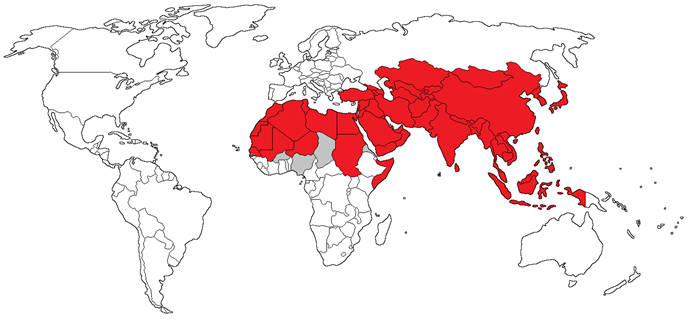
5: I can’t fully understand which view “Orientalism” falls under. It’s either a term used to describe the (very ignorant) way the Western world perceives Muslim-Europe, Muslim-Africa, and all of Asia, excluding Russia. Or it’s the way that both worlds perceive one another; kind of wistfully and curiously, accepting that they will never fully grasp the ways of the other. Either view is unwise, but the latter is a little more acceptable for some reason in my mind (?). There’s also a knowing factor that the West’s view of the East comes from a certain amount of oppression and lust for power over it for the sake of maintaining oil properties. Again, neither view is particularly helpful because it accepts both the West and the East as cohesive entities, ignoring the fact that there are oceans getting in the way of one another and still accepting the fact that they all behave the same way. Which may be true to an extent, but it leads to generalizations that don’t benefit or help understand either world. “Oriental” is an outdated term for a reason: It doesn’t do a satisfactory job or representing anybody it seeks to describe. Upon my research, the original user of the term “Orientalism” is Edward Said who used it for the title of his book in 1978, but the term Orient seems to pre-date the text.
There’s plenty of examples of the West misunderstanding the culture of the East . From films such as Disney’s Aladdin to the lyrics of Nicki Minaj’s Your Love, there’s a lot of ignorance to be had in American pop culture that seeks less to understand the ways of Asia and the Middle East, and more to use them as a less-than-accurate tool for the sake of rhymes or storytelling. There’s more than enough to be said for this, but I do think it’s important to consider the value that these examples carry; while ignorant, they are often harmless inaccuracies and should be taken for no more than a thoughtless line or lyric and little more thought deserves to be given to them than what was used to conceive them. Unless ramifications or consequences come from said thoughtlessness, in which case, should be publicly noted and rectified.
References
Davies, M. W., & Sardar, Z. (2008). The no-nonsense guide to Islam. Oxford: Ni.
Vaïsse, J. (2016, July 28). Muslims in Europe: A Short Introduction. Retrieved from https://www.brookings.edu/research/muslims-in-europe-a-short-introduction/
Edward Said – An Introduction to Orientalism – YouTube. (2017, April 24). Retrieved March 30, 2020, from https://www.youtube.com/watch?v=1aNwMpV6bVs
Akyol, M. (2011, March). Faith versus tradition in Islam. Retrieved March 30, 2020, from https://www.ted.com/talks/mustafa_akyol_faith_versus_tradition_in_islam
 Blog 4810