By: Kody Gustafson
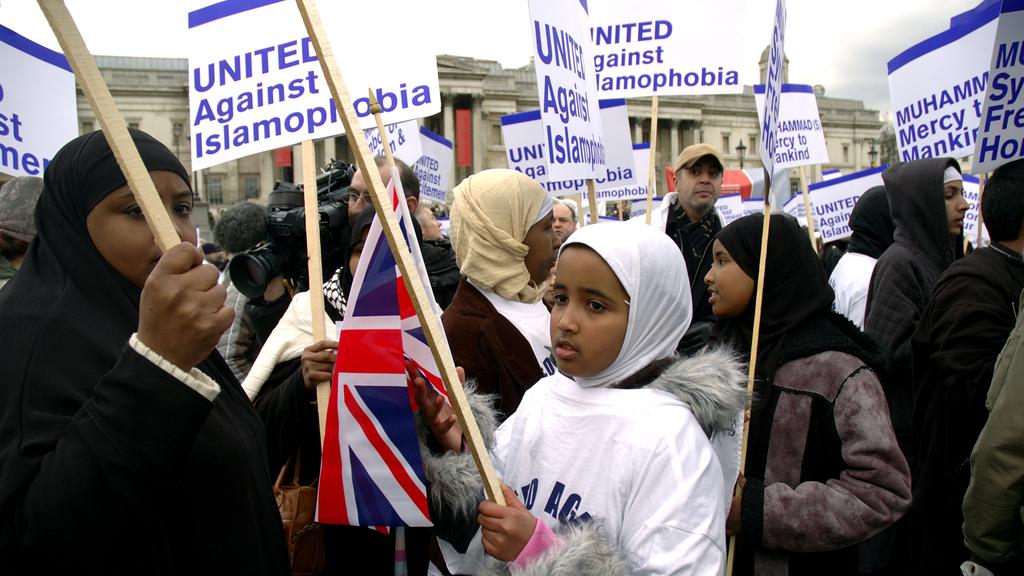
To begin I will discuss how Zemni and Parker explain the “failure of integration” of Muslims in Europe. One reason Muslims have been unable to integrate within European society is because many Europeans have come to view Islam as being anti-Europe. Through processes such as orientalism people have unjustly painted Islam and its followers as being diametrically opposed to and possibly in conflict with Europe. The problem isn’t that Muslims have failed to make efforts to integrate, the problem lies with a problematic European mindset when it comes to Islam. Muslims are already at a disadvantage to integrate because many Europeans have a predisposition against them. The EU has failed many of Muslim origin in particular with their conditions for EU membership. The framework established by the EU has set up the criteria for membership however, this framework has also been used to set the basis for exclusion. Another reason they have failed to integrate is due to many Europeans generalizing extremist Islamic groups to the entire Muslim community. Events such as the Iranian revolution and the rise of the Taliban have given many Europeans a chance to highlight how Islam represents a fundamentally different culture. Muslims were also viewed socially as being a problematic participant in European society. One of the biggest problems is that many have taken a position of being opposed to immigrants and view them as a threat to their way of life. If people would simply give these immigrants a chance and view them as a group that could promote a multi-cultural Europe and be good for communities. Those looking for a scape goat for economic or social problems have begun to associate these problems with migrants and the fact that the way they live their lives is culturally different. If people continue to view immigrants as being determined by their culture and incapable of meeting the demands of the secular European state, no change will ever take place.
I found both the Dispossessed article and the film to be very informative and lended new perspective to the problems currently occurring. I’m glad I watched the film prior to reading the article because I could visualize the situation they were in. One thing that struck me most from both the comic and the film was the vast uncertainty these people are facing all day every day on the journey to freedom. These people are at the mercy of the smugglers who are attempting to take them to their destination. The film made me reflect on how I view travel and for me it’s a leisure activity that I enjoy however, these people are travelling to save their lives and it is a constant struggle to survive. Entire families are exposed to harsh conditions on the journey to freedom and many of the smugglers leading them are gang affiliated and price gouge. These smugglers take advantage of people and drive the prices up, leaving many unable to afford transit and leaving them in a vulnerable place. I believe the comic was accurate however, it doesn’t do justice to the situation due to the severity of it. People are willing to help only so far as they get something out of it such as when the boat tugged the raft to shore but only in exchange for life jackets. One thing that caught my attention in the film is that it’s a wide range of people that are attempting to leave. From students to journalists, young and old everyone is attempting to flee persecution. The journey is not easy and many who are not physically strong will not be able to make the trip.
Islam in currently the second largest religion in Germany behind Christianity. Since the first wave of immigration in the 1950’s the Muslim community has grown amongst the largely Christian and secular population. During the mid 1950’s in Germany there was a labor shortage in an area with high economic growth. This labor shortage led to many laborer’s immigrating to Germany during the time. Many of these laborers came from Morocco, Tunisia, and Turkey and were primarily from rural regions and of traditional backgrounds. They left their origin countries to seek work due to population growth and unemployment. The typical migrant was a single man who was often unskilled. Both native Germans and these labor immigrants believed that the foreign laborers residency would only be temporary. Thus, they made little to no effort to interact with one another, which would become an integration problem down the line. During the late 1960’s German business firms realized short term labor was no longer advantageous and were reluctant to hire new unskilled foreign laborers. Many immigrants realized they could not save enough for the short term and decided to move their entire family to Germany. The problem with them moving their family to Germany was that many native Germans still believed the immigrants residence was still temporary. The second wave of immigrants who came to Germany can in the mid 1970’s through the mid 1980’s. This second wave of immigrants came from a larger range of Muslim countries. The main difference from the first wave was that these people were leaving their origin countries to escape civil war and revolutions that had led to chaos. These people were political migrants and victims of violence and persecution. Germanys policy of jus sanguinis has led to much debate and has had profound effects on the Muslim community in the country. Nationality determined by the blood of a parent is currently used in Germany. This has created an identity problem because once families immigrated to Germany and had children there it became a question of identity. One challenge posed by the Muslim presence in Germany include religious participation. Islam will become more and more visible in Europe over time and this has become a problem for some. The secular nature of Germany does not match with that of middle eastern countries. It was mentioned that some German landlords have refused to rent to foreigners. This creates a situation where ghettos are created, and many Muslims are concentrated in small areas. Another problem is that there are limited job opportunities and a high percentage of immigrant workers are at risk for unemployment.
The corona Virus has affected everyone across the globe and refugees are at an increased risk of catching the virus. Social distancing has affected the way we interact with one another and many countries have enacted travel bans to slow the spread. Refugees already have a tough time entering countries and this has made it even more difficult to do so. I believe certain European countries such as Germany have done a good job in allowing for refugees to enter their country. I also believe that this is not enough and more needs to be done to accommodate these refugees.
The 1951 convention is directly related to the status of refugees. The convention clearly spelled out who a refugee is and the kind of legal assistance and social rights they are entitled to. On the other hand, the convention also defines the obligations of refugees to host countries and who would not constitute as a refugee. The main difference between the 1951 convention and the 1967 protocol is that the former was mainly focused on protecting European refugees post WW2, while the latter has expanded to scope to the entire world. A refugee is defined as being “A person who is outside their country of nationality or habitual residence, has a well-founded fear of being persecuted because of their race, religion, gender, or ethnicity. Rights afforded to a refugee include “Refugees deserve as a minimum, the same standards of treatment enjoyed by other foreign nationals in a given country, and in many cases, the same treatment of nationals” as well as others laid out by the convention and protocol.
United Nations. “The 1951 Convention Relating to the Status of Refugees and Its 1967 Protocol.” UNHCR, http://www.unhcr.org/en-us/about-us/background/4ec262df9/1951-convention-relating-status-refugees-its-1967-protocol.html.
Hunter, Shireen. Islam, Europes Second Religion: the New Social, Cultural, and Political Landscape. Praeger, 2002.
Al Jazeera. “The Trek: A New Life in Germany.” Germany | Al Jazeera, Al Jazeera, 18 Sept. 2016, http://www.aljazeera.com/programmes/witness/2016/09/trek-life-germany-refugees-160912111625923.html.
 Blog 4810