Group A, Question 1:
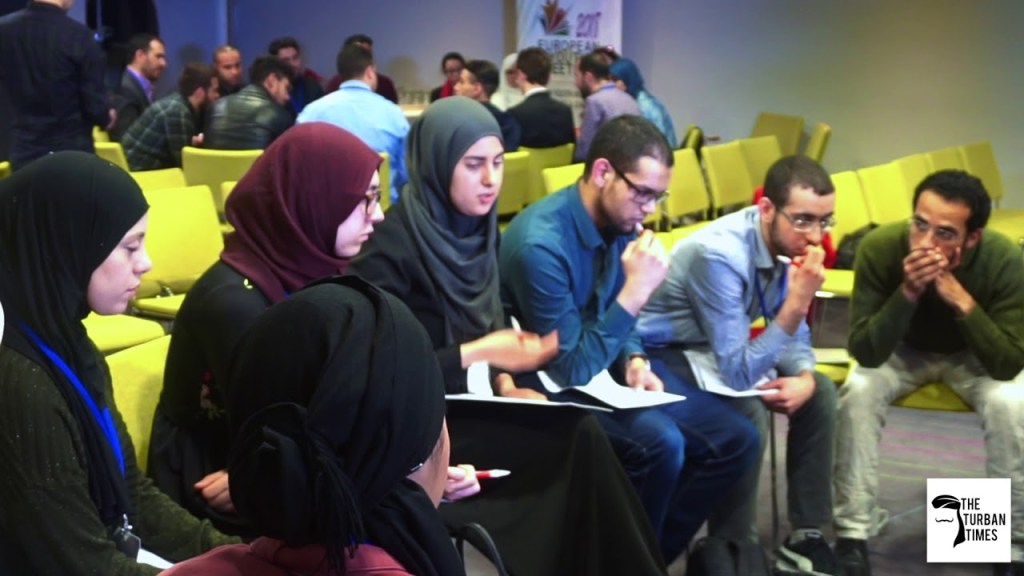
A lot of Muslim youth feel ostracized, unwanted, and depraved socially. Despite the multiculturalism in places like France and Germany, both countries haven’t done a great job of bringing their two largest cultures together. As a result, Muslims, of any generation, often feel like they don’t belong, and are often vulnerable to the sense of safety and community in an organization like ISIS. No society is free from racial discrimination, and the Sajan article quotes from a French study called France and the Unknown Second Generation: Preliminary Results on Social Mobility (2003) that “High dropout rates from school combined with the very high levels of unemployment among these groups draw attention to their subordinate position in the social hierarchy and point to a systematic discrimination” the Sajan article also claims: “Another study focusing discrimination in the workplace, published in 2006, showed that the chance for a getting a job interview in France for someone with a Muslim name is six times less than that of a Franco-French name despite identical credentials.” Similar studies in show that while Muslims in Germany feel connected to their society and state, 61% of Europeans think that Islam is not compatible with liberal European values.
There’s a very clear disconnect between societies, and it’s obvious that the best solution is to have a more open dialogue about these issues. But in my heart, I don’t feel that the liberal ways of these European countries should in anyway move backward to meet a compromise with traditional Islamic ideals. It’s certainly clear that more should be done about the racism in these countries, and I think there’s plenty of school programs that could be implemented to educate kids about the ways of Islam so that they could have a better perspective on the religion. But we know that kids typically naturally resist when it comes to curriculum changes for the sake of cultural diversity education (that’s at least how it worked in my hometown). There’s so much to be done. So many people need to change the way they think. And, like social issues in America, I like to think that time will solve these problems. As the older generation fades out, and more open-minded generations become the boss, change will come. The problems are: We shouldn’t have to wait, it’s unfair to let minorities go another generation before true equality is beginning to take place. And what if the next generation’s parents do a bad job of educating their kids and we don’t get anywhere? It’s all frustrating, but I do believe it starts with the schools.
Group B, Question 4:
The gist of Sajan’s article is that it’s absolutely clear that Muslim’s are treated poorly in some countries in Europe. From not being able to lock a job down, to feeling like an outsider compared to the rest of the community, to just feeling victimized, there’s reconstruction to be done. And it’s certainly a problem from both sides. Natives don’t take kindly to new ways of life in a super ignorant manner, ESPECIALLY with cases like Muslims, whose cultural identities seem rather in-your-face to those don’t practice. This of course is foolish, and after having a short conversation you can see that some of these are no more than surface-level customs in the same way that t-shirts and ball caps are a norm for westerners. And contrarily, Muslims historically have not done a great job of assimilating. This doesn’t mean assimilating in the way 19th-century Americans expected Natives to blindly become a part of our culture, but it does require an open mind from immigrants to accept new customs and to not hold your heart closed to western values because they look too secular on the surface. Church and state should remain separate wherever you are. This, by the way, is mostly based on my limited personal perception but I do feel like there’s truth to how I feel.
Group C, Question 6:
Sharia law is a set of rules which countries considered Islamic States mostly tend to follow. Sardar and Davies make the claim that it is hardly “Law”, as it is dynamic and in most cases it is up to interpretation by the judge. Sharia law has a history of upsetting consequences as well as reasonable punishments and shouldn’t be taken out of context or stacked up against other law enforcement institutions in the same way America’s entire department of justice shouldn’t be judged entirely for Jim Crow laws. Sardar and Davies also clarify that most Islamic societies aren’t necessarily for or against Sharia law. It’s a conceptual term that’s served to be intrinsic to the Muslim way of life for years, and therefore has a claim on the allegiance of all Muslims. They also they that it’s very powerful when it comes to politics; “to ask Muslims in general terms to oppose sharia is akin to inviting them to vote for a sin.” But that said, it still remains vague in the eyes of many Muslims and they largely don’t consider it to be the lens through which they see all justice. It seems to be what they resort to when it comes to interpreting the law and they come to different conclusions based on all different kinds of factors of the crime at hand.
Group D, Question 8:
The Musawah organization, as I understand from their website, is an group that focuses on the equal treatment of women in Muslim families and Islamic communities. A good chunk of Islamic countries have a history of holding women on pretty short leashes in a way that’s really upsetting to see and hear about. Especially if you don’t have much of a grasp on their religion as a whole to back up where they get these ideas or not having much knowledge of their scripture vs ideas invented by political leaders. Musawah’s goal is to educate the public and advocate for women who have been affected and hurt by inequality and abuse in the Muslim community. A key message they share is that the Qur’an didn’t invent or introduce patriarchy. It’s a societal construct that’s been founded on years of misconstruing the words of their sacred text and misinterpreting it into something unjust. These are all completely fair statements and the women of the Islamic faith need better treatment urgently, as they’ve been suffering in silence without a voice for decades.
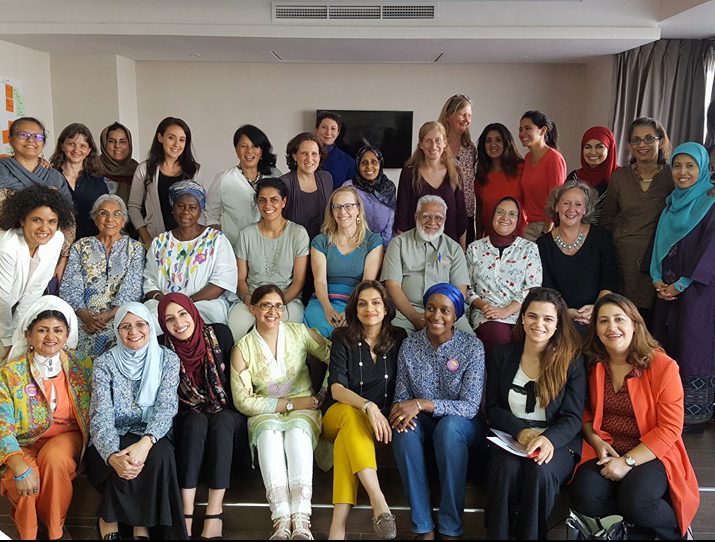
Musawah’s twelve principal areas of concern, as listen on their website are: Equality of Spouses in Marriage, Women’s Consent to Marriage, Women’s Capacity to Enter Marriage, Polygamous Marriage, Divorce Rights, Child Marriage, Women’s Financial Capacity After Divorce, Custody of Children, Guardianship of Children, Inheritance Rights, Violence Against Women (In Marriage), and Nationality Rights.
These are excellent causes. Women have proven to be victims of abuse in the home, on the streets, and have served entirely harsher punishments than men in many cases. This isn’t the case in every Islamic State, but it’s very present in far too many countries. Sardar and Davies site an instant of Sharia Law in Nigeria in the early 2000s in which a woman named Amina Lawal was sentenced to public stoning to death after bearing a child out of wedlock. “Charges against the father were dropped when he retracted his admission of fathering the child.” the statement reads. This was done by a court of law. It’s the exact reason the Musawah organization needs to grow and be heard, because violence against women that continues in the courtroom is still present today. Thankfully they’re doing what they can to stop it and they have my support.
References:
Davies, M. W., & Sardar, Z. (2008). The no-nonsense guide to Islam. Oxford: Ni.
Sajan, T., & Idicula, T. (2018, January 12). Decoding Europe’s homegrown terror. Retrieved April 13, 2020, from https://www.thehindubusinessline.com/opinion/decoding-europes-homegrown-terror/article9718569.ece
Sharia Law. (n.d.). Retrieved April 13, 2020, from https://www.billionbibles.org/sharia/sharia-law.html
Home. (2020, March 8). Retrieved April 13, 2020, from https://www.musawah.org/
 Blog 4810