Blog #11 The challenges associated with Muslim assimilation into Western society
- 1. To begin the experience of the Muslim youth in Europe is one that is unlike any other. Our first reading on Muslim Youth in Europe by Peter Mandaville goes on to describe this unique experience and highlights how it differs from those who grow up in a place that has a Muslim majority. One unique experience is the fact that much of the Muslim youth is torn between two different cultures. Their parents have instilled their Muslim culture on the children, however the children are also growing up surrounded by western culture. This is even more prevalent for Muslim children who attend public schools because they are constantly surrounded by western values. These children are seen as “others” in the eyes of many Europeans and this has an effect on their ability to find their identity. Many Muslims have struggled to find a way to fit in while still retaining their culture. While in a country that has a Muslim majority public displays of religion are common place and seen as normal. This is not the case in Europe as many have come to see public displays of Islam as being a threat to tradition. This intolerance towards Muslims has had two very opposite effects. One effect is that it has made the Muslim youth rebel against Islam and their parents leaving them more marginalized than before. They are not openly welcomed into western society and now that they have rebelled against Islam they are left somewhere in the middle lacking identity. Another effect that intolerance against Muslims has had is that it has pushed some to become even more rigid in their beliefs. This pushes them farther away from assimilating into western society and has given those who are against having Muslims in Europe another thing to point to as to why Islam is not compatible with western values. The youth has been alienated and rejected by many and left them questioning where they belong. The Muslim youth has also struggled with differing views than their parents. Some of the Muslim youth have come to see the older generation as still trying to live as if they were in the homeland. However, for the youth they have come to terms with the fact that they will have to practice Islam as the minority. Some have come to see Islam as being a defining aspect of what makes them different. Even when a youth pushes back against Islam they are still unable to escape their Muslim background.
- 4. The second article by Sajan Decoding Europe’s Homegrown Terrorism is a very interesting piece which further discusses the challenges associated with Islam in Europe. One of the key things I took from the article is that rather than trying to understand what is wrong with individual terrorists, many people would rather point to what is wrong with Islam. Due to various terror attacks many Europeans have come to believe that a successful multicultural society is almost impossible with a large Muslim population. I believe it is dangerous when people begin to link an independent terrorist attack with the Muslim community at large and only further creates problems within society. The Muslim youth has been marginalized and as seen in the previous reading it has pushed some to become more radical in their religious beliefs. Sajan goes on to explain how some Europeans are quick to blame terrorism on Muslims but it is through their unwillingness to blend Muslim and western culture together that these people are pushed to these acts of violence. The Muslim community and western values are more in line than many people like to think. The article mentions various studies that show how compatible the Muslim way of life is with western values such as a strong belief in democracy. I do believe that through marginalizing the Muslim youth we have created a situation in which pushes them towards radicalism based on false religious ideals.
- 7. Chapter 8 of The No-Nonsense Guide to Islam goes on to describe Sharia Law, its history, and how it is used today. I don’t believe Islamic law has always been consumed with punishment. The word Sharia has come to mean in religious terms as being “the highway of good life” and I believe that at its core it has legitimate components. I believe certain Muslim rulers have been consumed with punishment and have twisted the true nature of Islamic law. At times when the Muslim world was occupied with imperialism, Islamic law was used to justify rule. I believe Islamic rule was established to help believers live a life devoted to God. This concept has been manipulated over time and can’t be taken as divine.
- 8. The Musawah (Arabic for equality) organization is focused on creating equality and justice for all in the Muslim community. They are actively working to achieve equality and justice while stopping discrimination and treating others with dignity. The organization has also done much to work towards equality for Muslim women in society. These efforts towards the advancement of human rights have been made both locally and internationally. They are focused on sharing their knowledge across the globe and giving people an avenue to connect with other like-minded people. I firmly believe this organization can make a change and their current work has been able to advance the rights of Muslim women. The site was easy to navigate and their overall goal is to “We hold the principles of Islam to be a source of justice, equality, fairness and dignity for all human beings. We declare that equality and justice are necessary and possible in family laws and practices in Muslim countries and communities. “ making them a valuable resource.
Blog #10 From the journey to establishing a home in Europe, refugees face uncertainty the entire way
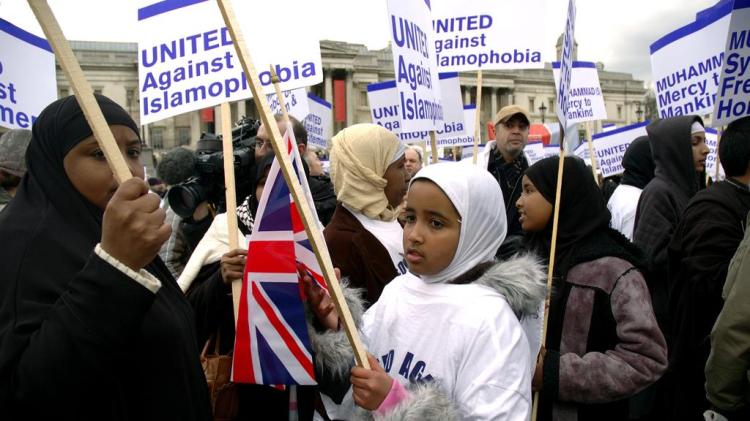
To begin I will discuss how Zemni and Parker explain the “failure of integration” of Muslims in Europe. One reason Muslims have been unable to integrate within European society is because many Europeans have come to view Islam as being anti-Europe. Through processes such as orientalism people have unjustly painted Islam and its followers as being diametrically opposed to and possibly in conflict with Europe. The problem isn’t that Muslims have failed to make efforts to integrate, the problem lies with a problematic European mindset when it comes to Islam. Muslims are already at a disadvantage to integrate because many Europeans have a predisposition against them. The EU has failed many of Muslim origin in particular with their conditions for EU membership. The framework established by the EU has set up the criteria for membership however, this framework has also been used to set the basis for exclusion. Another reason they have failed to integrate is due to many Europeans generalizing extremist Islamic groups to the entire Muslim community. Events such as the Iranian revolution and the rise of the Taliban have given many Europeans a chance to highlight how Islam represents a fundamentally different culture. Muslims were also viewed socially as being a problematic participant in European society. One of the biggest problems is that many have taken a position of being opposed to immigrants and view them as a threat to their way of life. If people would simply give these immigrants a chance and view them as a group that could promote a multi-cultural Europe and be good for communities. Those looking for a scape goat for economic or social problems have begun to associate these problems with migrants and the fact that the way they live their lives is culturally different. If people continue to view immigrants as being determined by their culture and incapable of meeting the demands of the secular European state, no change will ever take place.
I found both the Dispossessed article and the film to be very informative and lended new perspective to the problems currently occurring. I’m glad I watched the film prior to reading the article because I could visualize the situation they were in. One thing that struck me most from both the comic and the film was the vast uncertainty these people are facing all day every day on the journey to freedom. These people are at the mercy of the smugglers who are attempting to take them to their destination. The film made me reflect on how I view travel and for me it’s a leisure activity that I enjoy however, these people are travelling to save their lives and it is a constant struggle to survive. Entire families are exposed to harsh conditions on the journey to freedom and many of the smugglers leading them are gang affiliated and price gouge. These smugglers take advantage of people and drive the prices up, leaving many unable to afford transit and leaving them in a vulnerable place. I believe the comic was accurate however, it doesn’t do justice to the situation due to the severity of it. People are willing to help only so far as they get something out of it such as when the boat tugged the raft to shore but only in exchange for life jackets. One thing that caught my attention in the film is that it’s a wide range of people that are attempting to leave. From students to journalists, young and old everyone is attempting to flee persecution. The journey is not easy and many who are not physically strong will not be able to make the trip.

Islam in currently the second largest religion in Germany behind Christianity. Since the first wave of immigration in the 1950’s the Muslim community has grown amongst the largely Christian and secular population. During the mid 1950’s in Germany there was a labor shortage in an area with high economic growth. This labor shortage led to many laborer’s immigrating to Germany during the time. Many of these laborers came from Morocco, Tunisia, and Turkey and were primarily from rural regions and of traditional backgrounds. They left their origin countries to seek work due to population growth and unemployment. The typical migrant was a single man who was often unskilled. Both native Germans and these labor immigrants believed that the foreign laborers residency would only be temporary. Thus, they made little to no effort to interact with one another, which would become an integration problem down the line. During the late 1960’s German business firms realized short term labor was no longer advantageous and were reluctant to hire new unskilled foreign laborers. Many immigrants realized they could not save enough for the short term and decided to move their entire family to Germany. The problem with them moving their family to Germany was that many native Germans still believed the immigrants residence was still temporary. The second wave of immigrants who came to Germany can in the mid 1970’s through the mid 1980’s. This second wave of immigrants came from a larger range of Muslim countries. The main difference from the first wave was that these people were leaving their origin countries to escape civil war and revolutions that had led to chaos. These people were political migrants and victims of violence and persecution. Germanys policy of jus sanguinis has led to much debate and has had profound effects on the Muslim community in the country. Nationality determined by the blood of a parent is currently used in Germany. This has created an identity problem because once families immigrated to Germany and had children there it became a question of identity. One challenge posed by the Muslim presence in Germany include religious participation. Islam will become more and more visible in Europe over time and this has become a problem for some. The secular nature of Germany does not match with that of middle eastern countries. It was mentioned that some German landlords have refused to rent to foreigners. This creates a situation where ghettos are created, and many Muslims are concentrated in small areas. Another problem is that there are limited job opportunities and a high percentage of immigrant workers are at risk for unemployment.
The corona Virus has affected everyone across the globe and refugees are at an increased risk of catching the virus. Social distancing has affected the way we interact with one another and many countries have enacted travel bans to slow the spread. Refugees already have a tough time entering countries and this has made it even more difficult to do so. I believe certain European countries such as Germany have done a good job in allowing for refugees to enter their country. I also believe that this is not enough and more needs to be done to accommodate these refugees.
The 1951 convention is directly related to the status of refugees. The convention clearly spelled out who a refugee is and the kind of legal assistance and social rights they are entitled to. On the other hand, the convention also defines the obligations of refugees to host countries and who would not constitute as a refugee. The main difference between the 1951 convention and the 1967 protocol is that the former was mainly focused on protecting European refugees post WW2, while the latter has expanded to scope to the entire world. A refugee is defined as being “A person who is outside their country of nationality or habitual residence, has a well-founded fear of being persecuted because of their race, religion, gender, or ethnicity. Rights afforded to a refugee include “Refugees deserve as a minimum, the same standards of treatment enjoyed by other foreign nationals in a given country, and in many cases, the same treatment of nationals” as well as others laid out by the convention and protocol.
United Nations. “The 1951 Convention Relating to the Status of Refugees and Its 1967 Protocol.” UNHCR, http://www.unhcr.org/en-us/about-us/background/4ec262df9/1951-convention-relating-status-refugees-its-1967-protocol.html.
Hunter, Shireen. Islam, Europes Second Religion: the New Social, Cultural, and Political Landscape. Praeger, 2002.
Al Jazeera. “The Trek: A New Life in Germany.” Germany | Al Jazeera, Al Jazeera, 18 Sept. 2016, http://www.aljazeera.com/programmes/witness/2016/09/trek-life-germany-refugees-160912111625923.html.
Blog # 9 Exploring Islam, and moving past stereotypes
The first reading from this week concerned myths about Muslims and in particular those living in Europe. Justin Vaisse lays out four myths in his article that must be addressed in order to deal with the real challenges currently facing Europe. The first myth he discusses is that being Muslim “constitutes a fixed identity” in the eyes of other non-Muslim people. Furthermore, this means that rather than looking at someone’s social class, nationality, or gender they are characterized by their Muslim faith. They use the Muslim community as a whole as a scapegoat for other problems. Another myth he goes on to discuss is the idea that Muslims in Europe are in a sense foreign and “alien” to the native culture. This is simply not true and for centuries European culture has been in ways influenced by Muslim culture. For example, “the approximately 15 to 17 million persons of Muslim background currently in the EU-27 countries (population: 500 million) include both citizens and non-citizens of European member states, but a majority of them hold French, British, German, etc. nationality” this highlights the integration of Muslim people into the European sphere.
One reason it is important to make a distinction between the religious and political dimensions of Islam is that the political dimension is not always representative of the actual religious core. One important point to be made is that Sharia Law owes very little to the Quran and cant be taken as divine. Some Muslim rulers have departed from what the Quran says and one must differentiate between what the fait says and what the government does. Another important point is that authoritarian regimes who claim their version of Islam as absolute truth deny manifest diversity of plurality of Islam. These regimes make their own rules and their actions are not always representative of the faith.
I found the TED talk by Mustafa Akyol to be very interesting and informative. He does a great job of explaining how the worlds general idea of the Islamic faith is too focused on tradition and not enough on its core beliefs. It is important that we don’t generalize a problem created by extremists to the entire Muslim community because it is not reflective of the group at large. One of his main points is that many problems people associate with Islam are a product of tradition and how a ruling body used select facets of Islam to justify their model of ruling. One example is the seclusion of women in certain Muslim cultures which is not mentioned in the Quran but rather adopted by a ruling party. Another one of his main points was that political culture is the real problem not Islam. Non-Muslim governments point to the past and highlight examples of how Muslim led governments have been oppressive and used faith as justification for some of their practices. This is unfair because as time goes on different people take control of government and just because one regime misinterpreted the Quran doesn’t mean the next one will. Another point he makes is that one reason relations between Europe and the middle East have been tense is due to colonialism. European colonialism has led to resentment from the Middle Eastern community and made many become more stringent in their beliefs.
Another topic discussed in this week’s readings was that of what is Islam and who is a Muslim. Islam is a monotheistic religion and to be a part of this faith one must believe that “There is no God but God, and prophet Muhammad is the messenger of the God” and do so freely and sincerely. Islam affirms belief in one God who is all powerful and the absolute creator. One important tenant of Islam is that it rejects the idea that God intervenes in human form in history. There are three pillars of the Muslim faith and the first the Shahadah which is a call to prayer every day. The second is salat or prayer which should be done five times a day. The third pillar is that Muslims shall partake in fasting during Ramadan. To believe in Islam is to believe in the unity of God, believe in the prophethood of Muhammad and the messages of guidance he received, and believe in life after death and accountability on the day of judgement. A Muslim is someone who is logical and farsighted and is constantly aware of God’s presence in our everyday lives. A Muslim believes that the only explanation of all the wonder in the universe is that a creator exists.
The final reading discussed orientalism and the ramifications it has. Orientalism is a way of describing, representing, and controlling Islam. The term was coined by professor Said from Columbia university. However, Said may have coined the term but it has been used throughout history. Orientalism changed the way we view and study the Middle East and how we come to understand these “strangers”. One of the main points from the video with professor said is that the way we acquire knowledge about the orient is not innocent or objective, but rather has been influenced by certain motives and interests. For many years now, the West has formed views of the orient in a way that has distorted the reality of these places. It has served as a way for the Christian world to deal with the “problems” that Islam presents. It has served as justification for colonialism and a way for the West to have authority over the orient. A modern-day example of orientalism can be the stigma surrounding immigration on the southern U.S border. Immigrants have been painted as killers, drug dealers, and rapists so that the government can control who is being let in. They have been unfairly generalized and created a negative stigma around immigrants.
Sardar, Ziauddin, and Robin Yassin-Kassab. The Idea of Islam. C Hurst & Co, 2012.
Hunter, Shireen. Islam, Europes Second Religion: the New Social, Cultural, and Political Landscape. Praeger, 2002.
Vaïsse, Justin. “Muslims in Europe: A Short Introduction.” Brookings, Brookings, 28 July 2016, www.brookings.edu/research/muslims-in-europe-a-short-introduction/.https://www.ted.com/talks/mustafa_akyol_faith_versus_tradition_in_islam/transcript?language=en#t-304898
Blog Post #7 Polarizing perspectives on U.S intervention in the Middle East
In this week’s readings, Steven Kinzer discusses the 1953 coup in Iran and its numerous effects. The ramifications of the coup were immense both nationally and internationally. On the national level Iranians who had longed for democracy and had pushed for democracy to be strengthened were let down and felt betrayed by the U.S. Many Iranians had looked at the U.S and their fight for democracy as a beacon of hope and a nation they could look to for help. This all changed with the coup in 1953 and many Iranians began to resent the United States and their involvement within Iran. Iranians have long known the oppressive nature of nations that had conquered their lands and, in a sense, they saw the U.S as being another. Many felt that the U.S had in a sense robbed them of their democracy and impeded on their ability to govern themselves. The U.S became a hostile rather than a friend to many Iranians. The coup was a major setback in Iran’s political development and ended democratic rule. The U.S and the British put Mohammad Reza Pahlavi into power and his regime would become more oppressive on the Iranian people. This forced move by the U.S and British would affect many parts of Iranian life and corruption would ensue in many Iranian institutions.

Another prominent part of our readings was centered around “dual containment” and what that entailed. Dual containment included playing Iran and Iraq off one another in the hopes that eventually there would be a regime change due to the need to address the people’s needs. The U.S supplied arms and intel to Iraq while also supporting Iran. This kept them occupied with one another while the U.S continued to operate within the region. I don’t believe this was a good strategy and left millions of people subject to violence. While the U.S waited around for regime change many lost their lives and suffered. I am appalled that this was an actual policy and I believe it has many striking flaws.
The Truman and Eisenhower administrations implemented two very different approaches to world politics. The Truman administration was much more sympathetic to poor nations that had begun to see the rise in nationalism. One example of the Truman administration being sympathetic is when the U.S.S Missouri was used to bring back the remains of the Turkish ambassador. U.S navy members also marched with Turkish soldiers during the honor guard and this gesture was well received by the Turkish people. Truman tried to be a mediator between Iran and the British when they were in a dispute over oil within the country. Rather than trying to fight back against the nationalization of companies, Truman looked to find common ground and ways to appease both sides. On the other hand, the Eisenhower administration took a much more aggressive approach to world politics. Eisenhower would not stand for a country which he saw as anti-western to nationalize companies within their borders. He merely saw these small countries as being players in the much bigger cold war game. If these countries didn’t side with the west, they would be subject to U.S intervention.

In the video we watched professor Mead brings up “the axis of weevils” and offers a new perspective on current geopolitical situations. This “axis of weevils” consists of smaller countries which are in opposition to the current geopolitical landscape of the world. These countries lack the military ability to wage a full-on war, however rather than directly fighting against western forces such as the U.S they have decided to chip away at their influence in their regions. These countries are thought to share a common interest in rooting out U.S influence and disrupting their alliances within the region. I believe Meades argument has some valid points and by doing further research I have found similarities with what he is saying and what is currently taking place. However, I think his argument lacks sufficient evidence as a whole. I believe the phrase of “axis of weevils” is a generalized geopolitical term that unjustly characterizes a group.
- Mead, Walter Russell. “The Return of Geopolitics.” Foreign Affairs, Foreign Affairs Magazine, 15 Sept. 2015, http://www.foreignaffairs.com/articles/china/2014-04-17/return-geopolitics.
- Ben-Meir, Alon, et al. “The Dual Containment Strategy Is No Longer Viable.” The Dual Containment Strategy Is No Longer Viable | Middle East Policy Council, mepc.org/node/4827.
- Berkley Center for Religion, and Georgetown University. “The Turkish-Armenian Border.” Berkley Center Fo Religion, Peace and World Affairs, berkleycenter.georgetown.edu/posts/the-turkish-armenian-border.
- “The ‘Axis of Weevils’: Silly and Misleading.” The American Conservative, http://www.theamericanconservative.com/larison/the-axis-of-weevils-silly-and-misleading/.
Blog Post #6 Moving towards a modern political system in the face of overwhelming adversity
In our readings the main focus was set on establishing secular modernity in Turkey, and why Iran failed to do the same. Secular modernity in Turkey was brought forth by Mustafa Kemal who as president implemented a litany of policies which sought to incorporate western ideals into Turkish society and diminishing the power of religion in state affairs. By establishing a republic in which the president was elected by the general assembly, Turkey alienated itself from its mostly autocratic counterparts in the Middle East. In an attempt to create a secular state president Kemal banished the Caliph and would implement many policies that would limit religious influence in Turkey. Some of these policies included closing religious schools and taking the entire school system under government control. It is important to note that these policies were able to take place because the clergy in Turkey was not as powerful as that in Iran. In an attempt to further modernize Turkey Swiss civil, criminal, and penal codes replaced the former Muslim Sharia code. Turkey also moved towards a 12-month calendar and implemented many other western ideals into their society. Another important reason these changes were able to be effective in Turkey is because most Muslims living in the country followed Sunni Islam. This branch of Islam had been acquainted with borrowing before the state and following orders from a sultan who was in a sense all powerful. I found Kemal’s hatred of the Fez to be interesting and that he equated it an “emblem of hatred of progress” further demonstrated his want to break away from eastern ideals. I believe this was achieved however it has many shortcomings. Kemal ruled in a way in which was harsh on dissenters and went to great lengths to suppress certain voices.
On the other hand, Iran’s approach to democracy and modernity were not as successful. Religious leaders in Iran saw what was taking place in Turkey and sought to prevent the same from occurring in Iran. In an attempt to block some of Rezas most prominent projects clerics would put pressure on certain programs and stalled to prevent some from being enacted. During his coronation Reza sought to make it western styled and borrowed concepts from the Spanish and British. Many Iranians followed the teachings of Shiite Islam which emphasized fidelity to religion before loyalty to the state. It also prohibited the clergy from ever bowing to temporal power. This made enacting change in Iran much more difficult than in Turkey. The clergy was powerful and wouldn’t allow for many progressive policies. There was a large power struggle between mosque and state in Iran. This struggle is highlighted by the disagreement between Reza and the clergy in closing down bath houses. Simple projects that could go a long way in improving health were banned by religious officials. Another area in which Iran is different is that the clergy would not allow for women to have the right to vote. Foreign influence also stalled Iran’s progress towards democracy. The British sough to retain decisive influence in the area and this was a topic of discord with Iranian leaders. Reza also hindered Iran from becoming a modern society through his strong nationalist feelings. He went as far as banning foreign words from being on street signs and only relied on Iranian doctors and was skeptical of others.
While trying to achieve unity both countries faced many problems. One of the biggest problems was that democracy had not fared well in places that had “turbulent” societies. Islam and democracy had not previously worked out and they were going against history here. Many people living in Iran and Turkey were illiterate and knew very little of life outside their locales making it even harder to press for change. Another issue in persuading people that democracy was the best form of government is that this was a time were dictatorships seemed to be the best form of governance. Leaders such as Stalin and Hitler had captivated their nations and seemed to be doing good things for their people. One of the biggest problems as I have discussed is religion and in particular orthodox religion that pressed back against progress. Many people such as nomads living in the area did not want to change and give up their way of life. Civic rebellions were also common due to many policies being enacted by decree. The Dodd’s readings discuss problems with conventional geopolitical thinking and urges readers to approach geopolitics in a more critical way. To think critically about geopolitics, one must come to realize that the current system is not natural nor inevitable. Critical geopolitical thinkers look at the world and geopolitics in a more diverse nature and try to understand differences in certain areas. One problem associated with conventional geopolitics includes its overemphasis on conflict and competition. It neglects to assess the effects that cooperation could have and is one dimensional. Realism is a central component to historical geopolitics and sees the world as being in a state of anarchy which is not accurate. Historically geopolitics has been used to put what is going on in the world in simple terms. However, in doing so it neglects many nuances of each situation. Dodds proposes that we start to scrutinize thinkers and commentators who believe they can make accurate assumptions about the world based on historical geopolitics. To think critically is to break don each situation further and one way to do so is by breaking down geopolitics into three categories. These categories include looking at geopolitics in a formal, practical and popular sense. This allows for us to study geopolitics in a much more concise way that better reflects what is happening in the world. By looking at geopolitics in a critical sense we can begin to liberate people from oppressive geopolitical structures which were insufficient in describing their situation. We must promote the world as being a more equal place and move past preconceived beliefs.
Blog Post #5 Geopolitics and the tumultuous history of U.S Iran relations
This week’s readings challenged my understanding of geopolitics and left me wanting to research the topic further. I would define geopolitics as being a unique way of studying the relations and interactions between not just civilizations but the people that make them up as well as how residing in a different space can influence values and beliefs. Geopolitics takes much more into account than just looking at international relations, it looks at both political and human geography. I found Dungins point concerning the state being an organic living being to be of significance. Prior to reading this article I didn’t take this approach into account and I feel as though I missed out on really analyzing a country. Another point I found interesting was that of his definition of space. He describes space as equating to quality and that each space has unique characteristics and effects on those living in it. Dividing the world into regions such as North, South, East, West allows for us to focus on differences between them. Even within these spaces they can be further divided and places that are labeled absolute have different characteristics than the rest of the space. I never really considered space to be more important than time, however after reading I have changed my mind and I agree with Dungin. I did further research on the effects that space have on people and their civilization as a whole and found that this was more profound than time.

I originally thought that geopolitics was centered around just studying international relations. I never really thought about how the space you live in influenced how you grow. Dungin offered a good example of how people growing up on an island country will have different values and beliefs than that of a large landlocked country. I did further research and found a Ted talk by Parag Khanna that offered valuable insight on geopolitics and how space has influenced history. He discusses the importance of space and how competing for space has influenced current borders and the conflicts that have been fought over them. This view conforms with Dungins and again shows how space influences beliefs and values.
The Kinzer readings were also very interesting and to be honest they upset me to an extent. I was particularly upset with that fact that current U.S – Iran relations are so tense, and much hostility is present. I was unaware of the long fight for democracy in Iran and the fact that the U.S has failed to adequately support this movement upsets me in particular because our country has been through a very similar situation. Kinzer makes it clear that there are many parallels between the U.S fight for freedom and that of Iran’s. Both countries sought to shake off their oppressive leaders and had a genuine cause for doing so. I thought the story about Baskerville was of interest and I found myself comparing him to George Washington in some respects. In particular Baskerville and Washington were unlike former radical revolutionary leaders and their mission was genuine. Establishing democracy in the middle east is of great importance to the U.S government and they have effectively alienated the Iranians and have treated them with hostility rather than support. The U.S and Iran also have many things in common such as limiting Russian influence in the area. The push for freedom in the U.S is a main source of inspiration for the Iranians and the fact we have let them down is unacceptable. Bad policies and lack of cooperation have strained U.S Iran relations and this is even more prevalent today. By stressing the importance of history between these two powers Kinzer points out many ways in which the U.S and Iran are similar and are compatible to one another. All of the similarities should lead to a stronger relationship however this has not been the case. I agree with Kinzer and I believe the U.S needs to rethink their stance in respect to Iran. The U.S Iran and Turkey could become a power triangle within the region and this could promote the growth of democracy. I am looking forward to researching this topic further and I plan to follow current news between Iran and the U.S much more closely.

Resources:
“Geopolitics: Theories, Concepts, Schools, and Debates.” Geopolitica.RU, 2 Jan. 2019, http://www.geopolitica.ru/en/article/geopolitics-theories-concepts-schools-and-debates.
Kinzer, Stephen. Reset: Iran, Turkey, and Americas Future. St. Martins Griffin, 2011.
Khanna, Parag. TED, http://www.ted.com/talks/parag_khanna_mapping_the_future_of_countries?language=en.
Post# 4 Discord among scholars concerning how to approach ending poverty in the world.
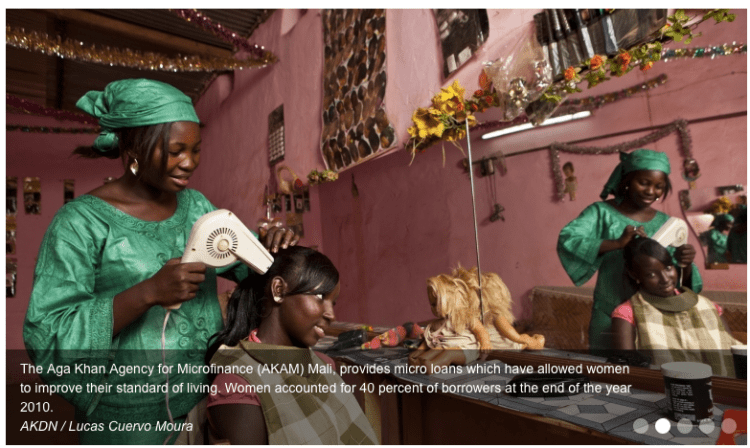
In Banerjee and Duflos Poor Economics they discuss Micro-credits and the effects they can have in poverty-stricken countries. Micro-credits are described as being an extension of small loans to poor borrowers who most likely lack collateral, steady employment, or credit history. One negative aspect of Micro credit institutions is that they often disprove of people borrowing money to buy consumption-based goods. To prevent those using their credit some institutions have made an effort to ensure that the money being spent is strictly income based. On the other hand, these programs are positive because they encourage borrowers to work together and reduces the amount of risk associated with the loan. These micro-credits allow for the poor to avoid the high costs associated with bank withdrawals. These programs can be attractive in part because they are incentive based and the group can cover a member who may not have been able to make his payment. Another positive is that by pooling resources the poor avoid the problem of having a small individual account that is not likely to be allowed by a bank. I believe these programs hold much promise, but they must be restructured to accommodate those who are in need of their services. I believe the plans should consider the circumstances in which agricultural workers live and create payment plans that best suit it.

There are currently 126 Micro-Credit institutions established in my country of Mali. However, of those 126 many of them are on the verge of bankruptcy and need support. One significant problem with the implementation of micro finance in Mali is that the political climate is relatively unstable, and threats of violence are common. Government corruption has hindered the progress of reducing the level of poverty in Mali and much of the population has lost support for these micro-credit institutions. However, there still is hope for these institutions and that is in part due to a select few which have diversified between operating in both urban and rural settings as well as beginning to offer both credit and savings products. Another step in the right direction is through the implementation of credit programs that are tailored to the needs of agricultural workers, which includes most of the poor. Combining cheaper and more efficient technology with micro-credit programs could be vital in putting an end to poverty.
The article “Instead of Bringing Jobs” offered a new approach to ending the poverty crisis in Africa and other struggling countries. I found their solution to be a reasonable approach that has protentional to reduce seasonal poverty. By giving seasonally timed loans agricultural workers would be able live with less risk and be able to focus on other aspects of life. Time and time again job creation in some of these countries has failed, however this approach could be the solution to the problem. I believe their approach to ending seasonal poverty is an innovative approach, however it is a program that is limited to certain situations which fit a certain criterion. I am skeptical that this would work in Mali due to security concerns and the geographic nature of the country. Migration to seasonal work could prove difficult due in part to Mali’s lack of adequate infrastructure.
The article by Nick Dearden offers a new perspective on the current economic situation in Africa. I was surprised and troubled after reading about how much money leaves Africa every year and about some of the policies that enable this to happen. I agree that the global community should act much like a state government when it comes to the redistribution of wealth. I believe the international community should take steps to redistribute wealth back to countries which have been exploited over the years. The article goes on to discuss how African governments must stop allowing for large companies and subsidiaries to operate in tax havens which allow for wealth to be concentrated with a few people and allow for it to leave Africa without sufficient returns. The international community must also quit pressuring African governments into opening up their economies to privatization and their markets to competition that is unfair. We must allow and help to an extent these African governments to legally regulate companies and other investments within their country.
I side with economist Jeffery Sachs when it comes to the debate over the pros and cons of development aid. I believe that to truly solve poverty we must establish clear cut aid objectives that we can keep reliable data on. By raising living standards and giving people the ability to voice their opinions, I believe the government will in turn improve in both their transparency and ability to efficiently eradicate poverty. I’ve been doing much research on Mali and one of the leading factors of why poverty persists there is because the government is unable to effectively implement policy. Threats of violence and corruption must be eradicated first before meaningful change can be done. After reading and watching an interview with Jeffery Sachs and Esther Duflo I still believe the most appropriate approach is by first raising living standards through programs that are measurable. We must begin to allocate our resources in a more efficient manner and create new incentives that will promote growth. If funds were used appropriately a lot less could make a much more significant impact.
Mali is currently a country described as being severely off track. One reason it is classified as being so is because poverty rates have seen little decline over the years. This is in part due to the political instability and violence plaguing the nation. Sufficient change has not been made in the right direction and officials in Mali must come up with new strategies to combat poverty. One way they can make change is by expanding the scope of current reform projects in the country and making them nationwide to ensure that all have access.
Resources:
- “Agricultural Microfinance Evaluation in Mali.” Innovations for Poverty Action, 14 May 2018, http://www.poverty-action.org/study/agricultural-microfinance-mali.
- Banerjee, Abhijit V., and Esther Duflo. Poor Economics: a Radical Rethinking of the Way to Fight Global Poverty. Bloomsbury Qatar Foundation, 2016.
- Gertz, Geoffrey, and Homi Kharas. “The Road to Ending Poverty Runs through 31 Severely off Track Countries.” Brookings, Brookings, 13 Feb. 2018, http://www.brookings.edu/blog/future-development/2018/02/13/the-road-to-ending-poverty-runs-through-31-severely-off-track-countries/.
- “Microfinance in Mali: Aga Khan Development Network.” AKDN, http://www.akdn.org/where-we-work/west-africa/mali/microfinance-mali.
- Mobarak, Ahmed Mushfiq. “Instead of Bringing Jobs to the People, Bring the People to the Jobs.” Foreign Policy, 4 July 2019, foreignpolicy.com/2019/07/04/bring-the-people-to-the-jobs-seasonal-hunger-migration-bangladesh/.
- Dearden, Nick. “Africa Is Not Poor, We Are Stealing Its Wealth.” Corruption | Al Jazeera, Al Jazeera, 24 May 2017, www.aljazeera.com/indepth/opinion/2017/05/africa-poor-stealing-wealth-170524063731884.html.
Blog post #3 Sustaining growth in Africa’s emerging countries
In Steven Radelets “Emerging Africa” he goes on to discuss a new and innovative group of people leading the fight to end poverty and change negative perceptions of African countries. Dubbed the “Cheetah generation” this new group of leaders are working to replace stagnant and outdated policies with new innovative ideas which foster transparency and accountability. One way in which they are attempting to redefine Africa is by furthering democracy in places it has already been established and bringing it to areas which still live under authoritarian rule. Another area in which they are fostering change is by promoting growth in the private sector and in doing so they will create stronger ties between African countries and the globe. One unique aspect of this “Cheetah generation” is that they want to create a new Africa which is neither dependent on the western world for guidance or bogged down by past regimes. A key to changing the current situation in Africa will be to create communities that are “stable, safe, and dynamic” so they can establish themselves on a global level. In contrast to these new innovative leaders, Radelet describes the “Hippo generation” as being a slow-moving generation. Those included in this Hippo generation are leaders that attained power through fighting against former colonial and imperial powers. These leaders were capable of defeating their predecessors, however when it came to running the country under their leadership many of them failed to create sustainable institutions. This slow-moving generation of leaders set their respective countries back by consolidating power amongst those most loyal to them rather than those who were most qualified.
I believe Radelets positive view on the African ICT explosion is both valid and sustainable. Everyday technology is evolving, and it continues to become more readily available to people across the globe every day. By expanding internet access business opportunities are expanded to even the most remote corners of the world. One interesting thing I took from the readings was that cutting out a middle man can create many opportunities that were previously unattainable. Giving local farmers the ability to check agricultural prices and attain market information without the assistance of someone else allows them to make decisions for themselves and keep up with current market trends. The information technology boom also promotes government transparency and accountability. Citizens can now search for information on their own rather than getting news from one central source. Giving those living in poor areas technology which can expand literacy rates will promote a more educated population. Some challenges currently facing the spread of information technology are a lack of reliable electricity in impoverished areas as well as low literacy rates and the high costs associated with technology. Even with these challenges there is still hope, within the last ten years more fiber optic cables have been laid to connect Africa to the rest of the world.
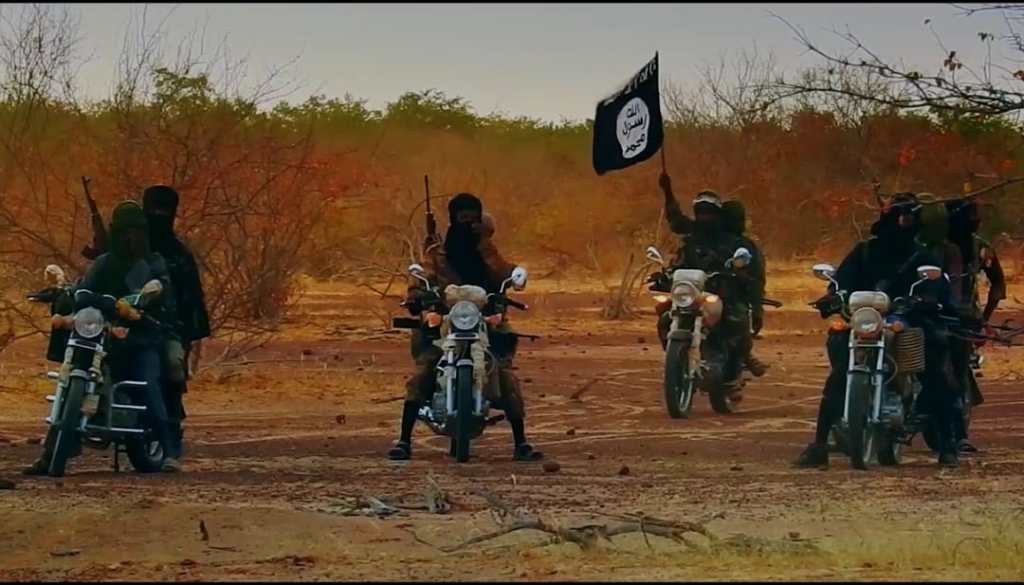
An example of an emerging leader that would be considered a part of the “Cheetah generation” is Rahama Nantoume. She is a journalist and peace builder which is committed to promoting peace and preventing extremism in Mali. She currently works in a think tank in Mali that is working on issues of governance, peace, and security. She is a part of this new generation that is convinced that a better world is possible through new and innovative ideas.
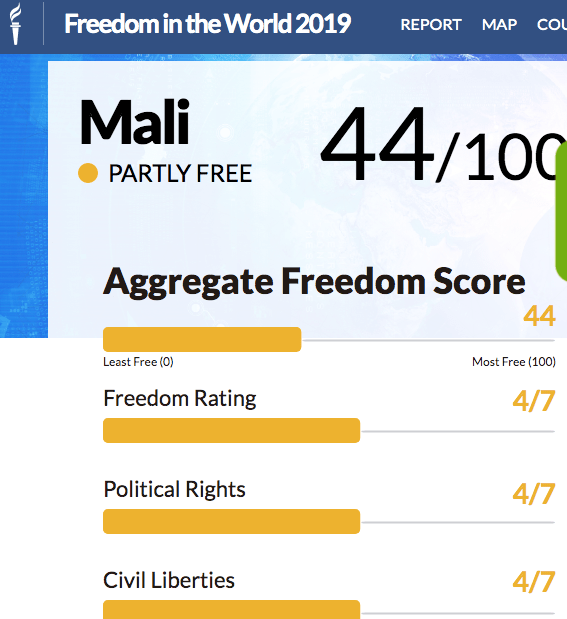
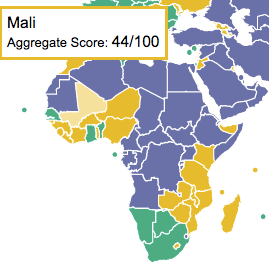
In chapter 3 of Emerging Africa, Radelet describes democracy as consisting of a protection of basic civil liberties, and human rights as well as being accountable to their citizens. A shift from the “Big Man” to the institution of power is another prominent point he makes concerning democracy. The growth of nongovernment watchdog groups which seek to monitor the government are also essential to the growth of democracy. Democracies have been ranked using Freedom House and polity iv factors. Mali has an aggregate score of 44 on the freedom scale which is relatively higher than many other countries in Africa. The country is described as being partly free but still struggles from political instability and violence. There is much work to be done in Mali but they are making strides in the right direction away from their imperial past. I also found that YALI is currently active in Mali and strides have been made to make medical information more available to the public.
While reading Poor economics I found that there are currently many challenges preventing countries from lifting themselves out of poverty. One of these challenges is that there is rampant corruption in many of these countries. The chapter references police men requesting bribes in exchange for assistance which is most impactful on the poor which lack the resources to pay such bribes. Another major issue is that there is much risk involved with the poor making financial decisions because if their decision doesn’t work out they bear all of the losses. Many living in poor countries work casual jobs that lack an assurance that the job will be on a consistent basis. When budget cuts are implemented the lowest workers, which are usually the poorest are cut first leaving them without an income. When economic crisis hits the poor are most heavily affected because if their already minimal consumption is cut they will be left with little to nothing.
Resources:
- “Freedom in the World 2019 Map.” Map | Freedom House, 13 Feb. 2019, freedomhouse.org/report/freedom-world/freedom-world-2019/map.
- “Rahama Nantoume.” IREX, www.irex.org/people/rahama-nantoume.
- “YALI Campaigns | Young African Leaders Initiative Network.” U.S. Department of State, U.S. Department of State, yali.state.gov/content block/yali-campaigns/.
- Radelet, Steven C. Emerging Africa: How 17 Countries Are Leading the Way. Center for Global Development, 2010.
- Banerjee, Abhijit V., and Esther Duflo. Poor Economics: Barefoot Hedge-Fund Managers, DIY Doctors and the Surprising Truth about Life on $1 a Day. Penguin, 2012.
- “Index.” Index, http://www.systemicpeace.org/.
Blog Post #2 Finding sustainable solutions to ending poverty in Mali
In his writings Steven Radelet identifies 5 factors that he classifies as being good news in Africa. The first factor is the rise of more democratic and accountable governments. This allows for citizens to become involved with the process and gives them an avenue for voicing their concerns in a meaningful way. Second is the implementation of more sensible economic policies which can free up resources for other pressing issues that were previously neglected due to stagnant policies. Third is the end of the decade’s long debt crisis, which has changed the relationship between Africa and the international community. Fourth is the spread of new technologies that are creating new opportunities for business and political accountability. Giving people access to the internet allows them to access information from across the globe and expands their view of the world. His final factor was the emergence of a new generation of policy makers, activists, and business leaders. These new leaders have been able to see the world from a broader view due to the expansion of access to worldwide travel and can bring new and innovative policies to the country.
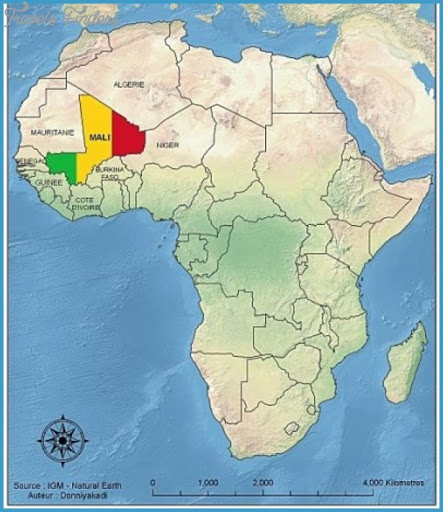
I do agree with Radelet that these factors are crucial in determining the positive future for countries which are still developing in Africa. After doing additional research I found that the factors he goes on the describe are directly linked to positive progress being made in these countries. The factors he lists are relevant to my country of Mali, however it is the lack of these factors that contribute to the current situation in the country. Politically Mali is a semi-presidential republic that elects their president directly by an absolute majority of the popular vote. However, the system is flawed, and much instability surrounds the presidency and other political intuitions within the county. A military coup was staged in 2012 and there is currently conflict between the government and armed militant groups in the northern regions of the country. The instability in the region has deterred aid groups from operating in the region in part due to attacks carried out on Un peace workers. Mali is geographically landlocked and is a region that is prone to droughts which have been proliferated by climate change. The arid climate and lack of efficient infrastructure in the country has made implementing new technology in the area a difficult task. Roughly 90 percent of the country’s poor population live in rural areas and overpopulation in the south region of Mali has further worsened the problem.
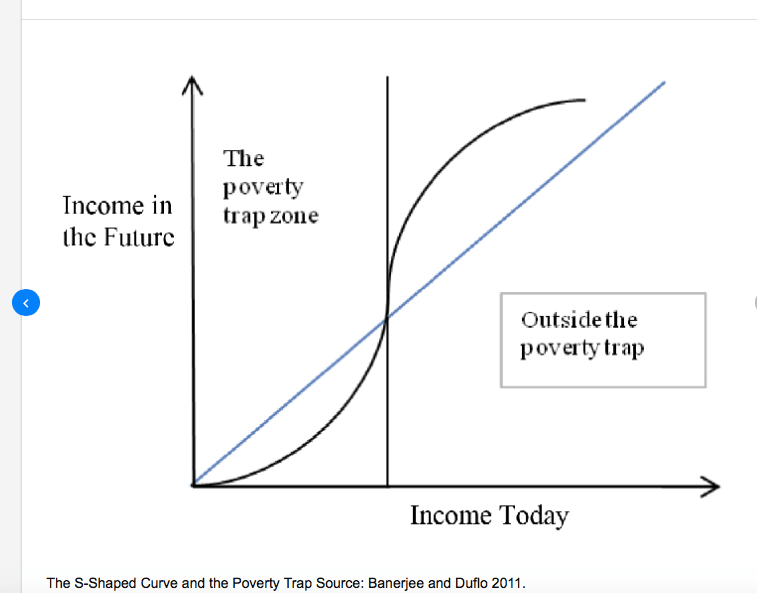
After reading Poor Economics I found that many people living in Mali are in a type of poverty trap. I believe that with a more transparent government Mali would become a more attractive place for aid to be sent. This aid would allow for them to invest in critical programs such as education which could help to break the poverty cycle that many live in. These traps have multiple forms a lack of education can lead to limited work opportunities which puts people in a cycle of poverty. Poverty traps are a type of self-reinforcing mechanism that causes poverty to persist due to a lack of information and incorrect expectations. The book goes on to discuss how when people start too low on an economic scale they become trapped and are unable to move up the economic ladder. The problem for the poor is that their income grows so slowly that their income for tomorrow is actually lower than it is today. This leads to the poor becoming poorer and the rich staying rich.
The first sustainable development goal of ending poverty in all its forms everywhere has so far been unsuccessful in Mali. This failure can be attributed to corruption, weak infrastructure and political turmoil. Efforts have been made to improve cell phone and internet access to the people of Mali, however the geographical nature of the country has slowed this progress especially to those in poverty-stricken areas. According to the World Bank economic growth in Mali has fell for the third straight year. To combat poverty in the region the World Bank has established 22 national projects and 8 regional projects worth and estimated 1.5 billion dollars collectively in the country.
There is currently a Human Capital issue in Mali and it must be addressed if meaningful change is to be enacted in combatting the issue. Many of those living in Mali lack sufficient education and employment opportunities that are associated with improving human capital. Mali is a country that is heavily dependent on mining and extracting minerals that will be used for trade. This type of work is not suitable for the elderly, or those incapable of partaking in hours of hard labor. Jobs which are sustainable for all classes must be brought to or established in Mali to bring people out of poverty.
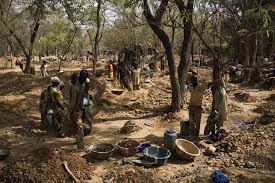
After doing the readings I was let with a question: How can incentives to invest be created in developing countries so that once citizens become educated they will be more likely to stay and improve their country’s situation rather than leaving for other more developed places? (Brain Drain)
Resources:
Banerjee, Abhijit V., and Esther Duflo. Poor Economics: a Radical Rethinking of the Way to Fight Global Poverty. PublicAffairs, 2012.
Pettinger, Tejvan, et al. “Human Capital Definition and Importance.” Economics Help, 28 Nov. 2019, www.economicshelp.org/blog/26076/economics/human-capital-definition-and-importance/.
“Year in Review: 2017 in 12 Charts.” World Bank, http://www.worldbank.org/en/news/feature/2017/12/15/year-in-review-2017-in-12-charts.
Radelet, Steven C. Emerging Africa: How 17 Countries Are Leading the Way. Center for Global Development, 2010.
“The World Factbook: Mali.” Central Intelligence Agency, Central Intelligence Agency, 1 Feb. 2018, http://www.cia.gov/library/publications/the-world-factbook/geos/ml.html.
“Goal 1 .:. Sustainable Development Knowledge Platform.” United Nations, United Nations, sustainabledevelopment.un.org/sdg1.
Editor. “Mali Map.” TravelsFinders.Com ®, TravelsFinders.Com ®, 3 Nov. 2016, travelsfinders.com/mali-map.html.
Post# 1 Poverty’s effects on the world and establishing what can be done moving forward to eradicate it.
Poverty is a problem that has wide spread ramifications and affects people across the globe. Many problems that receive much attention in the media stem from poverty, however world leaders are not currently doing enough to combat this problem. Defining poverty is essential in formulating a plan to reduce the number of people currently living in it. In Jacqueline Novogratz’s TED talk she goes on to define Poverty as being a complex issue that should be viewed as more than just income or lack thereof. She goes on to discuss poverty as also being an issue of personal freedom that affects a condition about choice for people across the spectrum. The main issue she is trying to convey is that those with the ability to help must do so in a way that gives those living in poverty the opportunities to move out of it. To do so those in positions to give aid must build small, affordable, and infinitely expandable technology that those living in poverty can utilize. The current production of technology that could help those in poverty is too low, in part due to high costs associated with producing them. I chose a TED talk by Rutger Bregman which seeks to reform our perceptions of those living in poverty and rethink current efforts in combatting the issue. A central issue he discusses is the current stigma surrounding those in poverty that it is in some way their fault and their responsibility to pull themselves out of it. Rather than following that flawed logic Bregman suggests that those living in poverty live in a context in which promotes bad decision making. So much time, money, and effort has been put into treating the symptoms of poverty rather than addressing the underlying causes of why some people live in poverty. He suggests that those in power must stop pretending they know what’s best in combatting poverty and find new and more innovative means of helping.

Sustainable Development goals have set forward tangible objectives for combatting poverty, aids, and discrimination of women and girls. SDG’s were adopted by the UN in 2015 and serve as a rallying point for countries to get involved and make a difference concerning some of the world’s most pressing issues. These goals are designed to span multiple subject areas as a way to show how current problems in the world are connected to one another. I believe these goals will be useful in bringing attention the level of connectedness we have to one another throughout the world and how our action or lack thereof affects those around us.

The effect of neo-liberalism is prevalent in how governments address poverty and has been detrimental in combating the issue. The World Bank and the International Monetary Fund have not been supportive enough of MDG’s and this has had a profound effect on how quickly and efficiently the problems are addressed. The World Bank must come to realize that prioritizing investment in social reform over economic reforms is what is needed to enact real change. The reluctance of these institutions to help from the beginning means that they have missed an opportunity to inspire others to help.
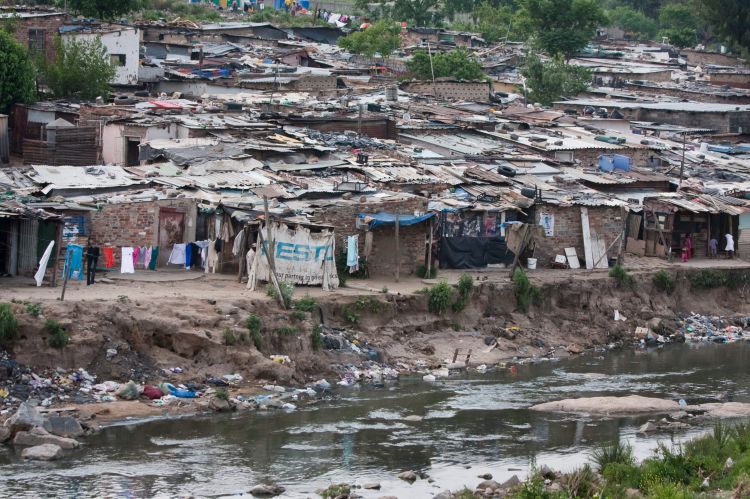
John McArthur goes into detail about the failures of those in power to enact meaningful change concerning poverty. He cites the U.S government as being one of the “players on the bench” due to the amount of aid they could offer compared to the amount of aid they do offer. Politics and the personal agendas of those in government have slowed progress and missed opportunities to inspire others to contribute. On the surface it seems as though governments such as the U.S have bought into combatting poverty, however when it comes to actually helping and working together they have failed. The stigma surrounding fixed foreign aid has deterred some in politics from addressing the subject due to fear of political resistance.
The article “How to Help Poor Countries” introduced many inefficiencies that are currently taking place in the realm of combatting poverty. The author suggests that governments should cut tariffs on goods and services being imported to these developing countries. These tariffs are detrimental to growth within the countries and discourage industrialization due to the high costs associated with doing so. Another way in which change can be enacted is by changing current multilateral trade agreements which lack transparency. Furthermore, the World Trade Organization should redraw their current policies concerning the settlement of trade disputes due to the fact that they are expensive and contain technical jargon that developing countries don’t have access to.
I found the article by Duflo and Banerjee to be very insightful and raised important issues concerning the implementation of aid in developing countries. One problem they raised that I thought stood out was the misallocation of resources currently taking place in countries which are in need of aid. From my experience I know that when the government proposes new taxes for more funding the public response is not one of joy but one of resentment. This is why we must find ways to use the money already allocated for aid in more efficient ways. By reallocating current resources we can improve growth in areas that are currently stagnating. Finding areas in which aid can make a substantial difference will be a focal point in moving forward.
Resources:
Bregman, Rutger. “Poverty Isn’t a Lack of Character; It’s a Lack of Cash.” TED, http://www.ted.com/talks/rutger_bregman_poverty_isn_t_a_lack_of_character_it_s_a_lack_of_cash?language=en#t-344227.
Novogratz, Jacqueline. “The Quest to End Poverty.” TED Talks, http://www.ted.com/playlists/67/the_quest_to_end_poverty.
Novogratz, Jacqueline. “Invest in Africa’s Own Solutions.” TED, http://www.ted.com/talks/jacqueline_novogratz_invest_in_africa_s_own_solutions.
“Sustainable Development Goals.” UNDP, http://www.undp.org/content/undp/en/home/sustainable-development-goals.html.
“Sustainable Development Goals.” UNDP, http://www.undp.org/content/undp/en/home/sustainable-development-goals.html.
“Sustainable Development Goals Launch in 2016.” United Nations, United Nations, http://www.un.org/sustainabledevelopment/blog/2015/12/sustainable-development-goals-kick-off-with-start-of-new-year/.
Sachs, Jeffrey. The Age of Sustainable Development. Columbia University Press, 2015.
McArthur, John W. “Own the Goals.” Foreign Affairs, Foreign Affairs Magazine, 6 Dec. 2013, http://www.foreignaffairs.com/articles/2013-03-01/own-goals.
Birdsall, Nancy, et al. “How to Help Poor Countries.” Foreign Affairs, Foreign Affairs Magazine, 15 Sept. 2015, http://www.foreignaffairs.com/articles/2005-07-01/how-help-poor-countries.
“Abhijit Banerjee & Esther Duflo in Foreign Affairs on Going Beyond Growth to Reduce Poverty.” Innovations for Poverty Action, 20 Dec. 2019, http://www.poverty-action.org/news/abhijit-banerjee-esther-duflo-foreign-affairs-going-beyond-growth-reduce-poverty.
 Blog 4810