Post 1-Poverty
A. Jacqueline Novogratz defines poverty as a condition about choice and the lack of freedom. Her main message is defining and explaining the true meaning of poverty. She speaks of a visit to Kenya where she encounters the children and adults living in true, desperate need. Many of the experiences proved how just a little bit of help has changed the lives around for many of the people she has spoken with. The woman who invested $50 to start a business repurposing dresses was able to begin making over $4 a day which brings her above the “poverty line”. She wants to create a world of dignity and opportunity for people all over the world. I listened to another talk by Rutger Bregman. He discusses that poverty is not a lack of character, but instead a lack of cash. His ideology is a bit different from Jacquelines, but reflects the same desire to improve the livelihood of those who are considered poor.
B. The vision of the SDG’s is to create a collaborated set of 17 goals and 169 associated targets for all nations to agree to and believe will be accomplished in the next 15 years. “They aim to end poverty and hunger, increase access to education, address migration, combat climate change, and reduce inequality.” The World Bank works as an observant of the SDG’s and provides help when things don’t go as planned. They work with issues such as poverty and inequality along with many others.
C. When the MDG’s were in their early years, the United States failed to directly engage. They were the players on the bench who refused to have contributions directly for the first portion in which prevented them from building political capital.
D. This article discusses the positive and negatives to providing more aid. Majority of the answer revolves around how the recipient countries use the money. If they have the proper leadership to truly see growth from the financial assistences depends on how they use it and where their focus is for the future. Many countries have benefitted from aid and have seen significant growth while others decline even after receiving aid. I agree with this. On a much smaller scale, if you give money to a homeless person, that money can either benefit or harm them depending on if they choose to spend it on necessities (food, warmth) or on negative objects (drugs, alcohol).
E. I think that the Eyes on the Prize portion really stood out within this article as it discusses the effects that other countries growth will have on China and India. Its not something I was originally thinking about. When a country sees growth, it may cause a decline for a different economy and China and India being mass producers will definitely see countries creating jobs that will cause many of their citizens to lose theirs.
Post 2: Emerging Ghana
Part I:
- Factors that classify as good news in Africa include that it is beginning to develop and leave behind the issues found within the past. These issues include the government and dictatorial control found within many countries throughout Africa. Countries have begun creating working governments which have helped lead to economic growth as they are working towards a goal of growing economically. Democracy has allowed the people of these countries to have a say, along with being better equipped to see growth all around. With my specific country, Ghana, the growth has been present in several different ways. They have seen changes in their government systems which have allowed for the poverty level to drop yearly, their rights to be protected through governance, and for their income, to increase drastically. They are seeing growth and change that many of their surrounding countries are working towards as well. In 1992 they provided a constitution for a multiparty republic. Their governmental body consists of many of the same factors found in the US with a president, vice president, and elections of four year terms. Since the economic side has improved, health and welfare have also seen vast improvements due to better sanitation, hygiene, more access to medications and healthcare, along with education. They are nowhere near perfect, but there have been drastic improvements all around for Ghana.

Part II
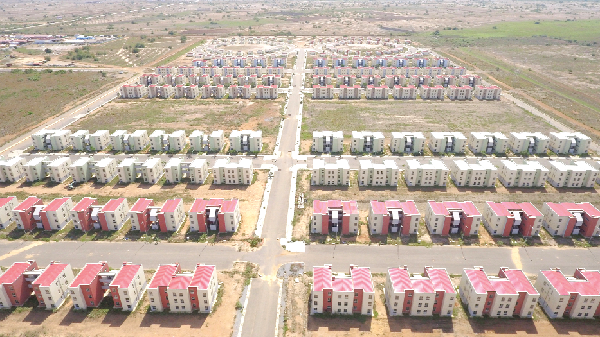
- Poverty traps are a cycle of a country being so poor that the only way they can begin being productive and seeing economic growth is through an investment, but lacking the funds that they need to overcome poverty. They need investments from outside sources in order to see growth. I think this is a definite possibility for many countries who have so many underlying issues such as a lack of technology, resources, being landlocked, diseased, etc. Not only do they need an investment, but they must use that investment in the right ways or it will be of little to no benefit. Many of these issues are present in Ghana although it does have its advantages as it is not landlocked, they have a growing government with rights. They have made improvements to their public health. Housing is an area in which Ghana needs improvements as many people are moving from rural to urban areas. The quality of housing is low, and they cost to build and provide low cost housing is an issue that could create a poverty trap. They are working towards providing better housing and large improvements are already very evident in many heavily populated areas.
- Ending poverty in all its forms is the goal of SDG 1. Within Ghana, there are vast improvements from where they had been in the past. Through the World
Bank site, you can see growth in almost every category, specifically GDP, school enrollment, life expectancy, GNI per capita and more. Their poverty levels have continually lowered over the past 15+ years and their growth rate from 1996-2008 is 2.6%. Economically, growth has been roughly 5% per year. Income has increased 2.6% per person allowing for more growth and a drop of the poverty line from 50% to less than 30%. - Human capital is a problem in Ghana when you put it in relation to other successful countries, but they are nowhere near the worst compared to other countries within
Africa. They rank at a .44/1.00 human capital index. Alongside this, their PPP was $4,051 in 2011. They are working in the right direction to continue to see improvements as their education levels improve, this will improve other important factors such as communication, judgement, emotional intelligence and more.
Sources
https://www.britannica.com/place/Ghana/Government-and-society
Click to access poor_economics.pdf
https://data.worldbank.org/country/ghana
https://sustainabledevelopment.un.org/sdg1
https://www.economicshelp.org/blog/26076/economics/human-capital-definition-and-importance/
Post 3: The Importance of Democracy to Growth
Part 1:
1. Explain the meaning of a “Cheetah” and a “Big Man” also called the cheetah generation and the hippo generation? (Ch. 7 and 3 from last week’s reading) Explain how these terms refer to a different way of looking at democracy and civil society?
The terms “cheetah” and “big man/hippo” refer to specific generations of Africans. The cheetah generation is the emerging African who wants to see change and are making the moves needed for change to happen. They are leaders who are pushing for better opportunities for their generation and the generations to follow. They are focused on “transparency, accountability, good governance, respect for basic human rights, and private sector economic opportunities.” (EMERGING AFRICA) The big man generation, also referred to as the “hippo”, is a generation stuck in the past. They are constantly complaining about governance and colonialism, along with their countries’ power. The generational differences are part of the styles that are allowing for growth of the economies and civil societies in certain countries. The cheetah coming in to replace the hippo has allowed for the ideas to change. The governmental figures of democracy are allowing for the country to move forward from what it had historically done to accomplish new goals and grow through the new experiences they are bringing to the table. These two terms (cheetah and big man) show the generational differences that have both helped and harmed Africa in terms of democracy and civil society.
2. Is Radelet’s positive view in Chapter 6 on the African ICT explosion valid and sustainable? What are the challenges?
The positive views found in Chapter 6 on the African ICT explosion seem incredibly valid. In terms of the growth seen just though access to communication channels is easily a positive aspect to spot. It creates a major opportunity for businesses to prosper which will in turn create growth all around. With access to a whole world of information, it has changed the way those in remote villages live. The technological advances have promoted not only more opportunities all around, but also have improved the quality of life through better governance, medicine, agriculture, and so much more. The challenges of relying on ICT are the factors that there are still so many places who have zero access and creating access for them is so difficult due to lack of resources such as energy, investors, and education. With places that have little hope for access to basic resources, it’s difficult to implement the technology needed to benefit them economically and socially. Africa lacks the skilled manpower needed to implement this technology. Alongside this, cyber crimes have the potential to target areas with less knowledge of how the internet truly works, along with hacking of phone lines which could cause risks in terms of privacy, safety, and business to business dealings.
3. You read quite a bit by now about Sub-Saharan Africa (SSA). You will further analyze your assigned/chosen country this week relying on what you have read so far and finding more information.
a) Find a ‘cheetah’ (person or organization) in your assigned country and show his/her/its work that helps the country move towards protection of human rights, free speech, systems of accountability, reducing poverty, etc.
A cheetah for Ghana was Kwame Nkrumah. Under him, Ghana was the “first black nation in sub-Saharan Africa to win independence”. Because of what he did, many others made the leap from the British colonial rule and gained independence as well. With the newfound freedom, Ghana was able to move forward in growing, gaining knowledge, protecting its citizens, reducing poverty, and much more. Nkrumah was trying to convince his citizens not to seek jobs in Europe any longer, but instead feed their own economy.
a) Chapter 3 of Radelet’s Emerging Africa talks extensively about democracy building as well as discusses how one defines democracy, what is elemental and how are democracies ranked and judged. How does your country rank? Explore the following sites.
A democracy can be defined in many different ways but overall, its a government system which allows those who are eligible to vote to make elected decisions of representatives. Within democracy, protection of basic civil rights. Without this, democracy would merely be present or useful. There has to be an ability to ensure that all is fair and equal for those who vote. These democracies are ranked using Freedom House and Polity IV standards. Ghana ranks 1.5/7 for its freedom rating, 1/7 for political rights, and 2/7 for its civil rights. This is fairly great in comparison to the other 17 countries that are considered democracies.
https://freedomhouse.org/report/freedom-world/2018/ghana
Part II: Choose one of the three questions below associated with Poor Economicsby Banerjee & Duflo. The problems associated with poverty are complex.
a) What are major obstacles in raising developing countries out of poverty? Ch 6
When it comes to raising developing countries out of poverty, the amount of obstacles can sometimes seem to be never ending. Large growing populations take a huge detriment to the growth of a poor country as the more people there, the fewer job offerings one may be able to find. Along with this, health and hygiene because an issue as the close proximities allow for disease and lack of resources to become more widespread among groups of people. Alongside this, when there is a lack of educational resources, it is difficult to overcome obstacles such as medical care, skilled labor, and electable officials to change the cycle. Another huge obstacle is the lack of capital investment. Without investors, the likelihood of that specific country to grow is not great. You can’t really make money without having money first when it comes to entire countries of poverty stricken people. Many of the countries suffering are also landlocked which makes for difficult and expensive imports and exports as well. Because of this, creating jobs can be hard as many times manufacturers seek elsewhere for an easier transportation of their goods. The technology needed to better help grow the country is not yet available to them as most often it is too expensive or they lack the resources needed to obtain them.
https://study.com/academy/lesson/less-developed-countries-obstacles-to-development.html
Post #4: Micro-Credits and the Pro’s and Cons of Development Aid
PART 1
1. What is the basic argument for and against micro-credits that Banerjee and Duflo make? Do you agree with them?
The basic idea of micro-credits are to provide small financial loans specifically to those suffering in poverty filled regions. The origin of this financial system began in Bangladesh and has remained present since the 70’s. These small loans allow for new businesses to begin and gain establishment in developing countries. https://www.investopedia.com/terms/m/microcredit.asp
In terms of the pro’s and con’s of microcredits, Banerjee and Duflo had many different ideas. They discussed the ways in which the small amount of money loaned could easily change the lives of those receiving it as it allows for them to overcome the barriers needed to have enough money to start or grow a self-employed business. Majority of the applicants receiving money would never have the opportunity to receive a loan had it not been for micro-credits allowing them to. Obtaining a loan in an incredibly poor country can be very difficult for an individual who has very little, if any assets. When you consider that there are people living with little access to credit, financing anything is nearly impossible without micro-credit. This can be a very positive start for someone if they use the money in a beneficial way. The downside of micro-credits is that for some, the money is lended to a group. If everyone doesn’t carry the weight of their payments, it can harm the entire group financially. Another downside is having to accommodate weekly payment plans. If there is a set back that week such as weather related issues, health, etc it could easily disrupt the available money needed to make a payment. Along with this, some of the loans have up incredibly high interest rates which prevent the ability to repay in a timely manner. The pressure of repayments also drew attention when there were claims of people committing suicide from the pressures of the officers seeking out money but many of these claims were found to be unreliable.
Overall I agree that there is good and bad in terms of the microcredit system. I believe that for women and children, the access to this money would be enough to get some on their feet to build homes, businesses, and more. But there are several cons as the higher ups are gaining so much from those who have so little. There is a constant pressure to repay the money, and at times this withdraws the learned skills needed to save money.
2. Are micro-credits working in your assigned country? Do you agree with its limits? What is happening in your country with micro-credits or any other way to handle money, savings, trade?
Throughout Ghana, microcredits are shown throughout as an alternative to traditional banking. Those who have been given microcredit have been seen as the members of society engaging productively. There have been noticeable improvements of education and health for those who have been granted borrowings. Through several case studies done in Ghana, the biggest suggestion found was that “clients’ children are regular in school and healthier than those of non-clients” and for this, they believe microcredits should integrate education and health products into their typical programs. I completely agree with this and believe that with the resources being given, there should be obvious improvements to the health and education of all who are benefitting from the microcredit. Due to these credits, the people of Ghana are opening businesses, farming, building homes, and growing economically.
3. Is the article by Mobarak “Instead of Bringing Jobs” a reasonable approach to fixing seasonal poverty? Would this work in the country that you are doing research on? What are limits?
As the article states, it would be a great solution in countries that have the job opportunities readily available in urban areas, but for a country suffering to even employ those already living in the city, the idea of bringing in others suffering in rural areas does not work. This could easily have a reverse effect if those in the poor rural areas began also taking the jobs in urban areas full of people seeking work. In countries where the urban areas have many jobs to offer, I believe that there should be help for those in the rural areas securing jobs and housing when they do travel into the city. Without this, there could be dangers in the cost of having to transport the poor back to their rural townships if they were not able to find profitable jobs.
Within Ghana, this would be a great option for those living in rural farming communities. During the off-seasons, there are still hundreds of jobs booming in the larger cities such as Accra (the capital) or Kumasi where the populations are high, but so are the job offerings. Within a city of that size, it would not affect their local economies nearly as much if there were to be rural employees coming in seasonally to access the labor markets. There is a limit when it comes to how many people do come into the larger cities as housing, resources, and job offering still may become limited if enough of the rural community made their way to the city. This also makes me question if the farming industry could lose employees to those who decide to go to the city and do not return?
4. Read this article from 2017 and watch the video – do you agree? https://www.aljazeera.com/indepth/opinion/2017/05/africa-poor-stealing-wealth-170524063731884.html
I believe illicit financial flows could easily play a part in the poverty levels of Africa as the amount of under the table transactions and falsified records have caused large sums of tax revenue and economic growth from presenting itself in Africa. These leaks keep profitability and internal money from remaining where it should be, and allowing for countries with a much less substantial poverty crisis to be making money off of those who need it the most. Imagine if Africa had the $1 trillion worth of illegal transfers along with the $1 trillion in outreaches of help over the past 50 years. That is an incredibly substantial investment opportunity to truly help the issues which lie within Africa and the poverty stricken nations desperating calling for financial support. I also agree that in terms of the reasons for which this has been happening, you cannot solely blame Africa, but it’s easy to see it in other places even though it’s the worst in Africa. Corruption is found all over the world, but it is very much so evident in countries within Africa.
PART 2
Banerjee/Duflo’s Chapter 10 talks about the debate on pros and cons of development aid with leading economists Jeffrey Sachs (Columbia University) and William Easterly (NYU) pitted against each other. Each side has valid points. After reading for a couple of weeks about the issue of ending poverty, what is your take on this debate?
1. Which side do you take and why?
With this debate, it is definitely easy to see both sides. As a compassionate human being, it feels right to take Sachs’ side as he believes that the aid is beneficial to the poverty stricken countries and at times is the only way that they will ever grow economically. It would be incredibly difficult for me to accept Easterly’s side, although he does have some very valid points. I think that if aid were to no longer be sent, eventually a country would have to figure out how to prosper on its own. The likelihood of the entire country not surviving is not high, but there is a possibility of even worse statistics to come before the rise. I believe that if there was a way to rid Africa of its corruption, there would be a much more successful economy because as we have seen above, with corruption comes the loss of substantial amounts of money.
2. Are there other arguments that could be made and thus another side that could be taken? There is lots of information online; for ex.
The argument that those suffering in poverty are already incredibly resourceful is very true. This can be seen in the way the dress, the foods they eat, their transportation methods, and so much more. I think that teaching them to be resourceful with money rather than just continually providing aid would be a side to that argument that could really draw a lot of questions and provide a lot of helpful information on how to further help those who are unbearably poor. The resources around these countries is also something that could be taken advantage of in many different, and more profitable ways if they were just given the knowledge needed to further profitability through their labor. A huge part of the problem is just the lack of knowledge and resources to obtain the education needed to see economic growth.
3. Gertz and Kharas in “The Road to Ending Poverty” list severely off track countries (SOTCs)? Is your country one of those and if so, why? What do they need to do to move forward? If your country is not one of the SOTCs, what are they doing to move forward?Ghana is not considered an off track country. They are working towards becoming fully unreliant of any aid at all. To do this, the president has created goals and to become more efficient and effective when it comes to managing their resources. They are a country that has a vast supply of natural resources so by utilizing those resources in a more profitable and useful way, the country will easily see growth economically. According to Ghana’s vice-president, “in the past 22 months, we have secured significant improvements in the trends of key macroeconomic indicators such as inflation, exchange rates, and real Gross Domestic Product (GDP) growth rates,” adding: “Ghana’s economy is projected to record one of the highest growth [rates] in the world in 2018”.https://www.gipcghana.com/press-and-media/657-ghana-committed-to-moving-forward-without-aid-bawumia.html
Post 5: Geopolitics and a Look Into the Past
1. In your own words, how would you define geopolitics? What is it about Dugin’s understanding of geopolitics that strikes you as significant? How does Dugin differ from what you originally thought geopolitics was? Search for additional information, a TED talk, for example, that covers geopolitics of the Middle East and then discuss how it conforms (or not) with what Dugin says.
Geopolitics to me can simply be defined as the relationship between the geographic factors within a specific place and how they effect that place politically. A great example of this would be a landlocked country with no natural ways to transport goods. Because of this, countries may find it difficult to create economic growth as moving things in and out is much more expensive and difficult. This is a geographic factor that impacts the politics of that country. Dugin takes this a step further by representing the studies of relations and interactions between spaces, states, civilizations, people, and economics. He describes that it is based on the centrality of space and to me, that’s something I would have never thought of when originally considering what geopolitics was. To understand this, you must first understand what he means by space. It is qualitative, living space, a place where orientations matter.
https://www.geopolitica.ru/en/article/geopolitics-theories-concepts-schools-and-debates
His thoughts differ from mine in just a few ways as the majority of his ideology I agree with. I believe in both his ideas on land and sea power and how there are good and bad aspects of control with each. I agree that there is much more power on the coast than in the continental mass. I listened to a speech given by Peter Zeihan discussing the ways in which Egypt was behind due to the lack of travel abilities. Until learning to use a sailboat or travel by camel, the Middle East had a major set back of their ability to move in and out. Another issue was their military, banks functionability, and more. Libia had similar issues. This is slightly different from what Dugin suggests as Egypt is not land locked, they have land and coastal powers. I think that originally, Dugin has a more understandable and reliable view on the benefits found within this country.
2. How does Kinzer set up his argument about the relations between the US and Iran? Why is Kinzer stressing the importance of history? Do you agree or have a different view?
Kinzer begins by describing the desires that Iran had to be more like the United
States. Iran saw the way the United States broke its chains from the British and began ruling on their own terms. Iran was working towards this as well. He describes Iran’s improvements in the five years following its Constitutional Revolution and how so many positive things were happening such as religious minorities having a say and a seat within Parliament, political parties forming, and a vibrant democracy being present. Throughout the chapters, history and the ways in which it has affected the future have been brought to the surface. One of the major historical happenings that he goes into detail about is the Persians. They created a constitutional government which was favorable for the masses and created justice among the people. Russia and Britain basically destroyed this through an ultimatum. I believe that the reason history is so important is so that the mistakes made out of pure greed are not repeated in the future. When we look back and can see the results of the actions made in the past, it gives clear reasoning as to why new decisions should be made to further growth and the wellbeing of mankind.
Post 6: Westernizing Turkey and Iran
Mustafa Kemal’s overarching goal was secular modernity. What is this and what is a modern political system? Was it achieved? How did Iran and Turkey differ in their approach to create democracies? What were threats in order to achieve unity?
Mustafa Kemal was the leader Turkey working towards trying to create a society that would move forward from the rut which they had been in for so long. He was working towards modernizing the country and implementing western ideology to their society in order for it to prosper and have greater opportunity for growth and rights. He was doing all he could to break Turkey away from the traditions, laws, and past of the east. His presidency was one unlike any I have ever heard of and in certain ways was incredibly gruesome and cruel. His methods of imprisonment and execution reminded me much more of a dictatorship rather than a presidency as he didn’t allow for the voices of many to be heard. Although his methods were not ones that I would agree with, they were somehow effective in moving the economy/society forward for Turkey and achieving many great milestones that have allowed for advances for the country.
In comparison with Turkey, Iran seemed to move at a slower pace when it came to modernization and the changes in which Reza was pushing for. Due to the following of Shiite Islam, it was much more difficult for him to implement the changes in which he was working towards for westernization. The clergy of Iran prolonged, or prevented entirely, many progressive directions in which he was trying to move Iran for health, safety, and economic growth. The clergy was one of the biggest hindrances for their society and caused a delay for so many rights that Reza was working toward. Religions involvement in politics was a major threat for both countries as they tried moving forward. Because of the many setbacks and rebellions seen from both the people and the politicians of both sides made it a challenge to become progressive.
Dodds holds that it is important to think geopolitics critically. What does he mean by this? What are the problems that he sees in how geopolitics has been historically practiced? What does he propose instead?
By suggesting that geopolitics need to be thought of on a more critical level, Dodds is applying that there is more to the argument than just what is directly in front of you when it comes to geopolitics. The cultural aspects behind a country can create a much different outlook that geopolitics may not. Geopolitics is not rooted in environmental determinism. It goes beyond the geographic factors within a specific space. Dodds wants geopolitics to be thought of as more than just the affects a mountain range or hurricane may have on a specific location. There needs to be everyday context that is brought forth in order to hinder a negative overall outlook to be placed on specific nations. Historically speaking, geopoliticians have allowed for negativity to affect entire nations when only specific areas may have the issues causing the whole area to gain a negative label. Dodds wants to see geopolitics become more impactful as a whole. To do this, he suggests that geopolitics becomes more objectified and allow for the partnership between human agents and non-human agencies to be noted within the argument. The simplicity between people and places needs to be more critically thought of and the need to water down the information does not mean that important factors should be left out in order for others to understand it. Instead Dodds would like to see those factors included in a critical, yet understanding way.
 Blog 4810